Newsletters

Back to Homepage
Thank you! Your submission has been received!
Oops! Something went wrong while submitting the form.
Research
SecuritySnacks
Newsletters
Podcast Episodes
No items found.
Newsletters
Rainy Day Newsletter #12 (but not 35)

Welcome to the New Year, I hope you all had a restful holiday season! Similarly to the November issue, we decided to hold this edition until the post-holiday inbox avalanche has (hopefully) subsided. I wouldn’t want you to miss your favorite newsletter!

It’s hard to believe that DTI turns one year old this coming Friday! In case you haven’t been a subscriber since “Day One”, allow me a brief recap: In September of 2024, at a DomainTools onsite meeting, serendipity brought together two individuals with deep security industry connections, and a passion for community. We hatched an idea, got a few more colleagues excited about this idea, and in late 2024, we pitched it to our bosses. A scrappy program on a shoestring budget, with an agreement to fail fast and pivot as necessary. We signed up for some KPIs (you better measure success if you want to spend other peoples’ money!), and we launched on January 9th, 2025.

As I sit here, drafting this message, I can’t help but look back with pride on everything we did this past year: The countless hours of collective hard work, the travel all over the world to meet with the community, and most importantly, all the great research we published. We positively crushed it, if I do say so myself!

Now it’s late December, and the future looks decidedly less certain. One half of the DTI Leadership team is no longer with the company. She would hate it if I called her out here by name, but IYKYK. Thank you for a crazy year of collaboration, planning, organizing, problem solving, and innovating. Myself and the remaining DTI Team miss you greatly!

I’m not sure yet what 2026 will bring, but I know it will be different. Different isn’t automatically bad of course, so time will tell! Stay tuned for updates!

Back to Business

For those of you keeping score, the weather here in the Pacific Northwest has officially transitioned from damp, dark, and cold to damper and colder but a little less dark. But luckily none of that has slowed down our researchers. Fueled by hot coffee and cold redbull, they’ve been burning the 4pm oil, and we have some fascinating, and frankly brazen, campaigns to share as we kick off the year.

Our featured research for this edition looks at a massive “super-cluster” of over 5,000 Chinese malware delivery domains. What makes this investigation particularly special is how we did it: our team utilized agentic AI systems to accelerate our analysis by 10x. If you’ve been wondering how AI actually changes the game for threat hunters, this is the blueprint.

We also pulled back the curtain on the bureaucratic side of state-sponsored espionage with our second deep dive into the APT35 leaks. It turns out that Iranian intelligence operators deal with the same mundane office headaches we do: Spreadsheets, expense reports, and ticketing systems.

Finally, we took a look at a B2B2C supply chain attack targeting the hospitality industry. By compromising hotel management accounts, attackers are reaching customers directly through official Booking[.]com channels. It’s a stark reminder that if the supply chain isn’t secure, neither is the trusted platform it supports.

Hot off the Presses

B2B2C Supply Chain Attack: Hotel’s Booking Accounts Compromised to Target Customer

DTI’s investigation reveals a sophisticated campaign targeting Booking[.]com customers by compromising hotel management accounts. Since May 2025, threat actors have generated nearly 1,000 spoofed domains to execute a “verify or cancel” phishing scheme. By hijacking official hotel messaging channels, attackers send urgent alerts that direct travelers to fraudulent sites. These pages are dynamically populated with the victim’s actual reservation details which have been stolen from the hotel’s own database to create a high-trust environment for stealing payment information.

Learn more

Chinese Malware Delivery Domains Part IV

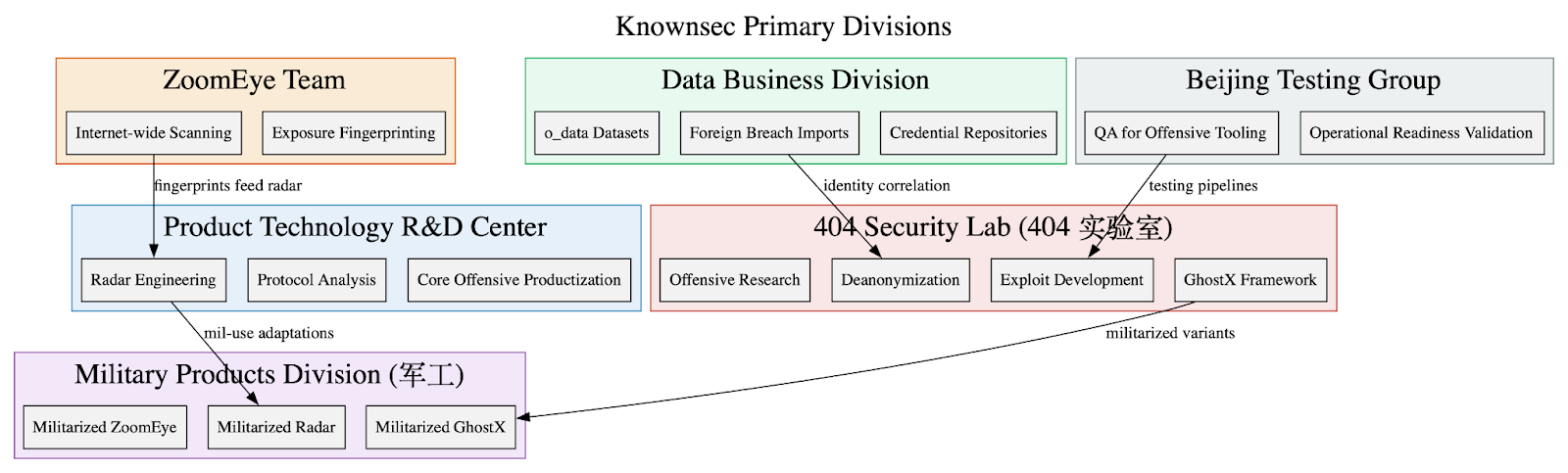
DTI’s latest investigation into massive Chinese malware delivery infrastructure reveals the addition of over 1,900 new malicious domains in the super cluster of over 5,000 domains we have been tracking since early 2025.  This activity, which primarily targets Chinese-speaking users, has evolved from a consolidated infrastructure into a fragmented and localized network using domestic Chinese registrars to improve operational security. The attackers employ deceptive lures such as spoofed downloads for Chrome, VPNs, and office software to deliver an array of trojans and credential stealers.

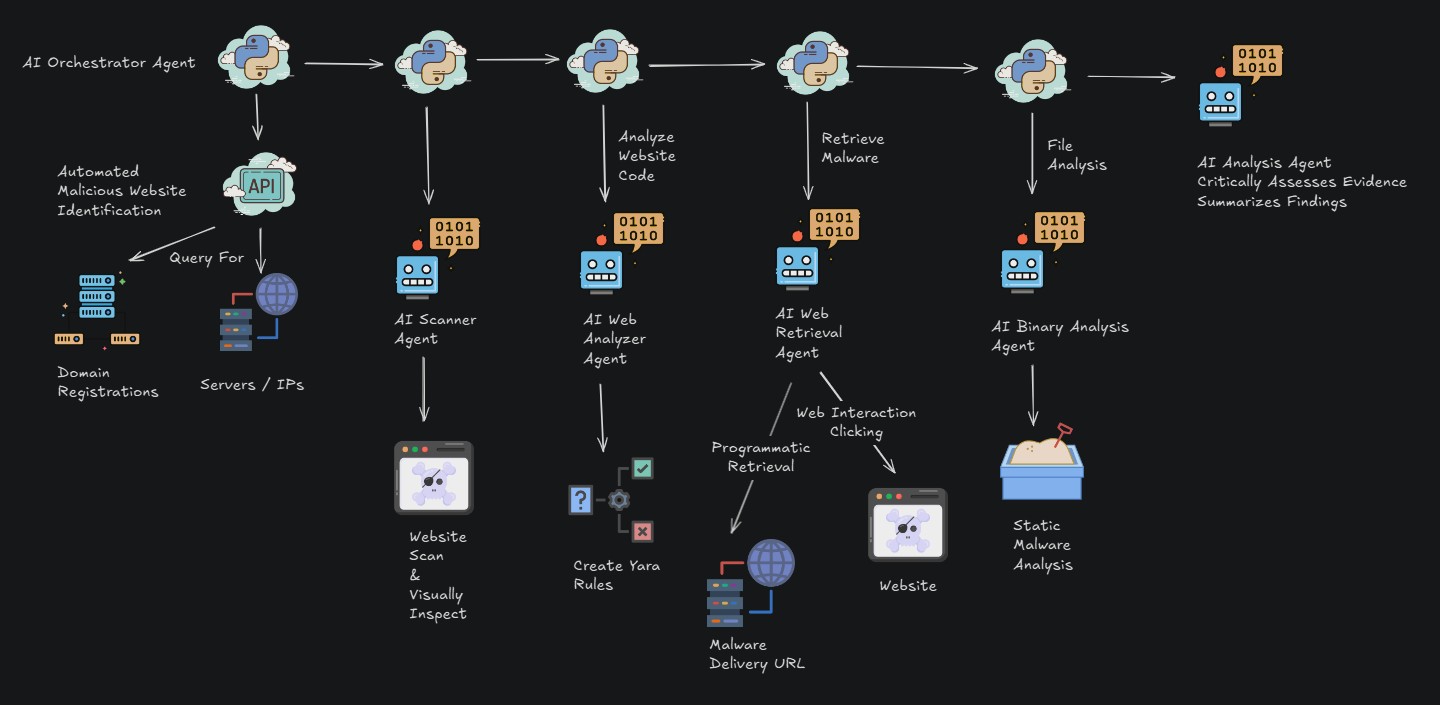
To manage this massive influx of data, our researchers deployed agentic AI systems to analyze the malicious domains, increasing analysis speed by 10x. By utilizing a “task-based AI orchestrator” paired with specialized sub-agents, the team was able to bypass anti-automation hurdles and autonomously interact with and analyze thousands of sites per day.

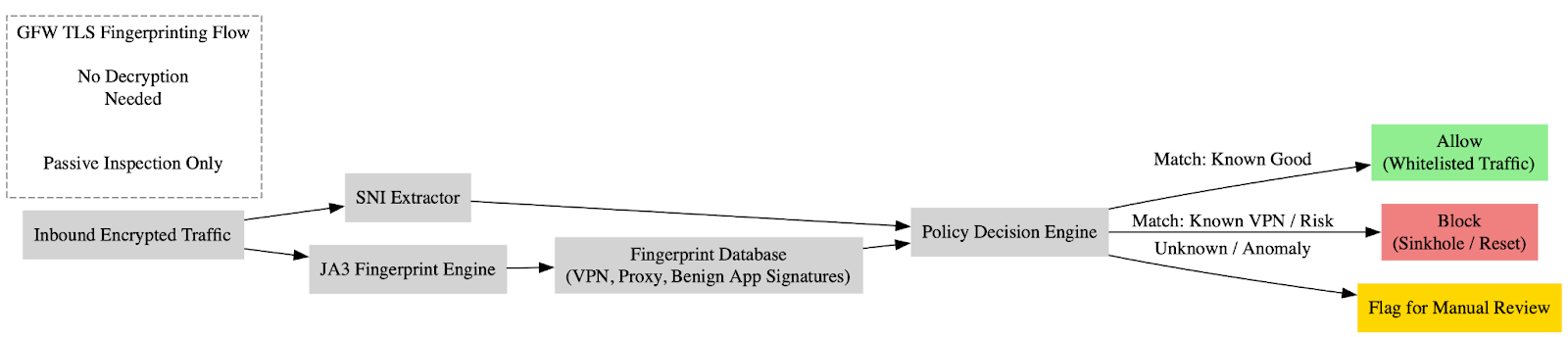
Agent Orchestration Flow Diagram

Read the latest research here

The APT35 Dump Episode 4: Leaking The Backstage Pass To An Iranian Intelligence Operation

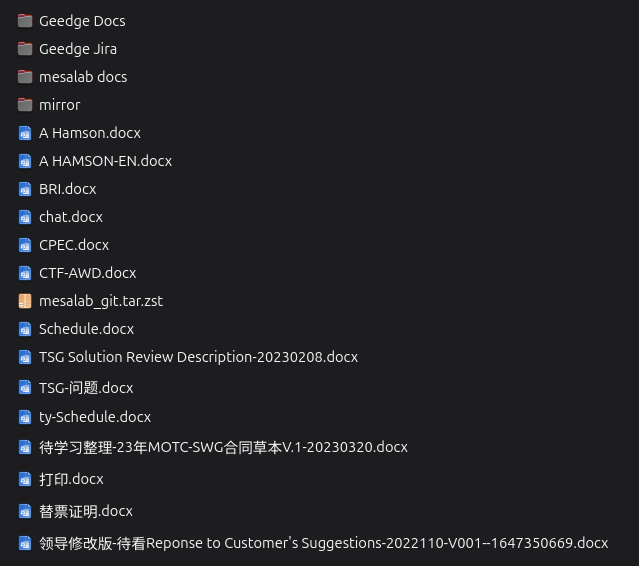
DTI’s latest deep dive into the four-part leak of internal documents from APT35 (Charming Kitten) reveals the financial administration powering Iranian state-sponsored espionage. The leaked files, ranging from payment spreadsheets to internal ticketing systems, show how the group has financed and managed their operations in spite of international sanctions. These documents track everything from server procurement and crypto-payment receipts to operator attendance logs and performance metrics, illustrating a “bureaucratic metabolism” where cyberattacks are treated as standard administrative workflows.

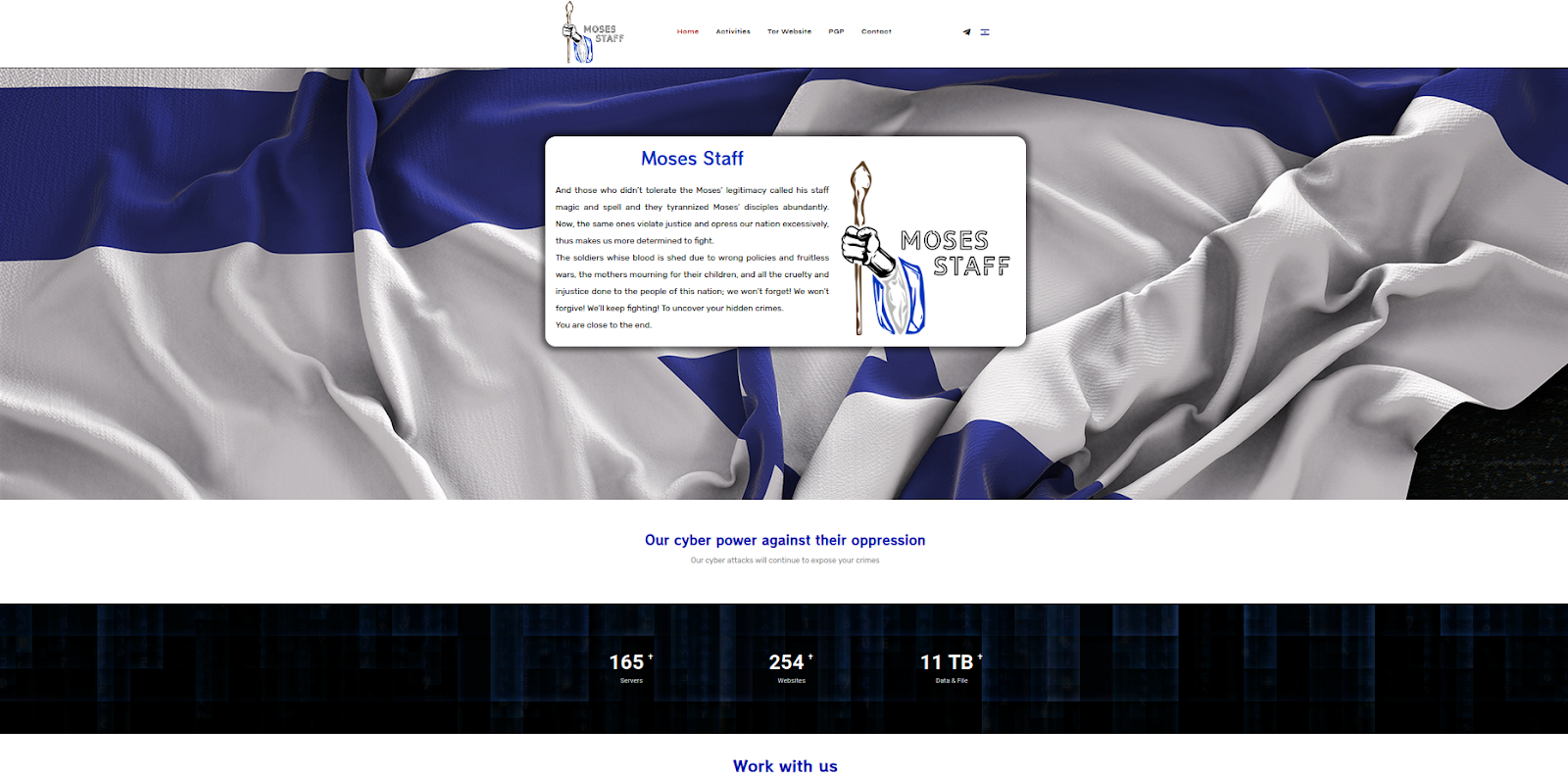
Despite this clerical precision, the investigation highlights a glaring lack of operational hygiene. The group failed to secure their backend infrastructure and cleartext credentials even after the internal documents were leaked, allowing researchers to map the financial and administrative connections between APT35/Charming Kitten and the Iranian “Moses Staff” threat actor. By stripping away the mystery of their technical exploits, this research exposes the administration, including budgeting, invoice reconciliation, and supervisor approvals, that sustains Iran’s strategic information operations across the Middle East and beyond.

Screenshot of moses-staff[.]io homepage

Read our investigation here

What We’re Reading

In case you’re behind on your cybersecurity reading homework, DTI team member Ian Campbell’s monthly recommended reading list will get you up to speed!

Checkout the full reading list here

Where We’ll Be

  • The DTI Travel Squad is staying local in January, but we will keep you updated on future travel once schedules get finalized!

Final Thoughts

As always, thank you to my returning readers! If you’re new, I hope you found this newsletter informational, helpful, and worthy of sharing with your peers. And of course I hope you will be coming back to read future editions!

We share this newsletter via email as well – if you’d prefer to get it to your inbox, sign up here.

If you missed last month’s content, here are some quick links:

Thanks for reading – see you next month!

-Daniel

https://www.linkedin.com/in/schwalbe

https://infosec.exchange/@danonsecurity
Learn More
Newsletters
Newsletter 11 Could Take Forever

Dive into DomainTools Investigations' latest threat intel! Read our 3-part series on China's Great Firewall leak and an analysis of APT35 (Charming Kitten) campaigns targeting the Middle East and Korea, focusing on Exchange attacks. Get the intelligence you need!

Subscribe to the Newsletter here

The title of this month’s newsletter is a deep cut taken from the height of my favorite music genre, the admittedly awkwardly titled “Alternative Music.” What can I say, the 1990s in Seattle were wild, man - you had to be there. 

Speaking of being there, last week was the Thanksgiving Holiday here in the United States. Normally my newsletter goes out on the last Tuesday of the month, but considering a lot of security professionals in the US got Thursday and likely Friday off, we decided to push publication by a week, so hopefully more of you can enjoy this edition instead of it getting buried under mashed potatoes and gravy!

The weather here in the Pacific NorthWest has firmly settled into “damp mode” (IYKYK), and the temperatures have started to creep below 40 degrees Fahrenheit (below 4 degrees Celsius for my international friends). I refuse to call it “The Big Dark” however - stop trying to make “The Big Dark” happen, Gretchen! Despite the cold, I’m happy to report that the intensity of DomainTools Investigations’ research output is only heating up. 

Our flagship research for November, “Inside the Great Firewall,” is a three-part series based on a recent dump of documents and technical details of China’s censorship infrastructure. This massive leak provided us with over 500 gigabytes of internal operational data. I had the pleasure of joining Dave Bittner on the Research Saturday podcast from N2K | CyberWire to discuss our team’s work. 

In addition to this deep dive, we also published a threat intelligence report based on leaked internal documents from APT35 (Charming Kitten). This report maps the Iranian state-sponsored actor's organization, tool kit, and campaign strategies. It details their campaigns against Lebanon, Kuwait, Türkiye, Saudi Arabia, Korea, and domestic Iranian targets, with a focus on their use of Microsoft Exchange attack chains. As a former Exchange Admin, I took personal note of that detail and was glad those days were behind me!

Last but not least, my team and I attended CYBERWARCON in Arlington, Virginia a couple of weeks ago. It was great to connect with the community, we had a small sponsorship booth and had many excellent conversations with fellow practitioners. I personally like the timing of this one-day conference, as it’s a nice bookend to its sister conference SLEUTHCON, which we attended earlier this year.

November was packed with research and tasty threat intelligence, so let's dive right in and get you up to speed!

Hot off the Presses

Inside the Great Firewall Part 1: The Dump

In September 2025, a historic breach of China’s censorship infrastructure leaked over 500 gigabytes of internal data detailing the infrastructure, design, and companies involved with the Great Firewall (GFW). DTI researchers analyzed more than 100,000 documents, internal source code, work logs, configuration files, emails, technical manuals, and operational runbooks. 

Part 1 covers the human machinery behind the GFW and the consequences of the leak. This data links specific engineers and administrators to their roles across state-run ISPs (China Telecom, China Unicom, China Mobile), academic research institutions, and Ministry of State Security (MSS)-linked vendors.

🔗Read the report here

Inside the Great Firewall Part 2: Technical Infrastructure

In Part 2, DTI analysts offer a forensic reconstruction of the Great Firewall’s technical infrastructure. From spreadsheets detailing app endpoint behavior, user monitoring intervals, and hardware configurations to blueprint files illustrating node relationships and control flows, the data illustrates a highly centralized yet distributed architecture, built on cooperation between state-run ISPs, telecom vendors, university research labs, and policy-design entities. Using this data, our researchers mapped the operational logic, software structure, and institutional alignment driving the digital surveillance regime.

🔍Read the full technical deep dive here 

Inside the Great Firewall Part 3: Geopolitical and Societal Ramifications

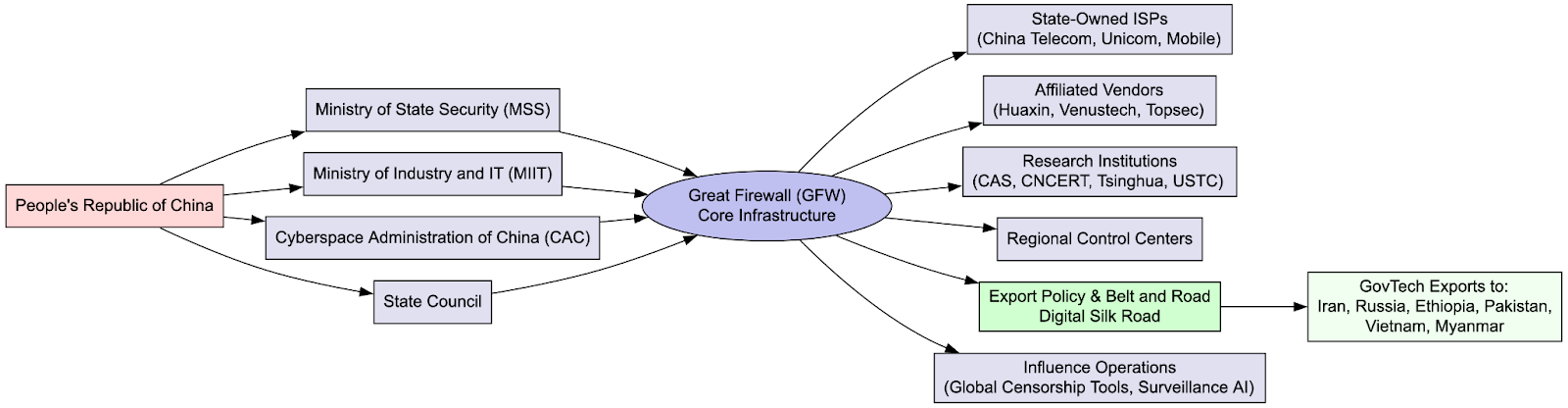
In the final part of the series, our team analyzes the strategic doctrine behind the Great Firewall. This analysis reveals the GFW as a cornerstone of China’s broader governance model, extending internal social control mechanisms into the digital realm while also projecting power abroad. The regime serves a dual purpose of insulating the domestic population from undesired narratives and foreign influence, while exporting technologies, protocols, and ideological models of digital sovereignty to other authoritarian or aspiring technocratic regimes.

🔗Read our analysis here

Threat Intelligence Report: APT35 Internal Leak of Hacking Campaigns Against Lebanon, Kuwait, Turkey, Saudi Arabia, Korea, and Domestic Iranian Targets

In October, internal documents from APT35, also referred to as Charming Kitten, were leaked on Github. Our researchers reviewed and analyzed the leaked documents to form a tightly linked forensic trail that maps both technique and organization. In this report, we broke down APT35’s tool kit which covers reconnaissance, initial access, and post-exploitation tooling optimized for large-scale, quota-driven compromise operations. Our team analyzed the actor’s operational profile and campaign strategies, identifying an emphasis on weaponizing exchange attack chains (ProxyShell, Autodiscover, EWS enumeration, and PowerShell driven tasks) to extract mailbox contents and Global Address Lists, maintain mailbox-level persistence, HUMINT extraction, and iterative phishing loops based on harvested address books.

🔗Learn more here

What We’re Reading 

In case you’re behind on your cybersecurity reading homework, DTI team member Ian Campbell’s monthly recommended reading list will get you up to speed! 

📚Checkout the full reading list here📚

Where We’ll Be 

  • SANS Cyber Threat Summit 2025, London, UK, 3-4 December

Final Thoughts

As always, thank you to my returning readers! If you’re new, I hope you found this newsletter informational, helpful, and worthy of sharing with your peers. And of course I hope you will be coming back to read future editions!

We share this newsletter via email as well - if you’d prefer to get it to your inbox, sign up here.

If you missed last month's content, here are some quick links:

Thanks for reading - see you next month!

-Daniel

https://www.linkedin.com/in/schwalbe

https://infosec.exchange/@danonsecurity
https://www.linkedin.com/in/schwalbe

https://infosec.exchange/@danonsecurity
Learn More
Newsletters
Tenth Newsletter Freeze-Out

Cybersecurity deep dive: NPM Phishing, Crypto Scams, & 18+ E-Crime analysis. Get expert research on supply chain attacks, wallet drain schemes, and trojans targeting social media. Plus, BSides NoVa recap & top reading list.

Subscribe to the Newsletter here

For the title of this tenth edition of my newsletter, I decided to go with a hit by “The Boss” (Bruce Springsteen for those of you who aren’t familiar). The obvious choice could have been 10 by Pear Jam, who hail from my adopted home town. But 10 is an album title, and not a song title, and we have patterns to follow! Speaking of Seattle, the days have gotten really short already, temperatures are dropping overnight, and I’ve resigned myself to packing away my summer clothes for another 9 months. On the other hand, the crisp air and the promise of Halloween candy, together with the return of some truly excellent TV shows make the indoor time a little more palatable.

But most importantly, spending more time indoors means more time to dive into research! My team has been absolutely prolific this month, bringing you some must-read research and showing up to engage with the community.

We’ve published a comprehensive analysis of the NPM Phishing attacks, where we analyzed how attackers stole developer credentials and bypassed MFA to compromise high-profile software repositories. We also took you Inside a Crypto Scam Nexus, exposing a web of wallet-drain scams tied to a single threat actor’s infrastructure. Furthermore, we’ve tracked a financially motivated cluster of more than 80 spoofed domains and lure websites in our 18+ E-Crime analysis, which were used to deliver Android and Windows trojans to users of age 18+ social media, online gambling, and government tax sites. Our team also attended and presented at BSides NoVa, where Ian Campbell presented on how Domain and DNS intelligence is a critical tool for investigative journalists and Malachi Walker spoke on the attack surface of Formula 1.

Let’s dive right in and get you up to speed!

Hot off the Presses

DomainTools Investigations BSides NoVa Recap

Our commitment to a thriving cybersecurity ecosystem means we put our time and resources toward contributing to collective knowledge and the common good. That’s why we were proud sponsors of BSides NoVa on October 10th and 11th.

Our team delivered two accepted talks, including Senior Security Ops Engineer Ian Campbell’s presentation on DNS and domain intelligence in investigative journalism, and colleague Malachi Walker’s talk on cyber threats in F1 racing. In his full write-up, Ian reflects on the importance of contributing to the infosec community and answers the question: Where do I learn how to do this kind of work?

🔗

Read Ian’s recap here

Repo the Repo – NPM Phishing

DTI researchers analyzed the series of high profile supply chain compromises caused by malicious code written to NPM repositories managed by stolen developer credentials. While developers of prominent NPM repositories have been targeted for many years,these events prompted CISA to release an alert due to their widespread nature.

Attackers used multi-stage fake NPM login pages to steal passwords and successfully intercept the legitimate email OTP/MFA code in real-time. This allowed attackers to establish their own authenticated sessions on the real npmjs[.]com while victims remained unaware their credentials had been stolen and their accounts compromised.

🔗

Read our analysis here

Inside a Crypto Scam Nexus

Our team of analysts uncovered a web of wallet-drain scams, ranging from browser extension popups and iPhone configuration profile traps to fraudulent web trading apps, were all tied to one threat actor’s infrastructure. We exposed how multiple websites such as medaigenesis[.]cc, novacrypt[.]net, and zzztd[.]com were hosted on the same server IP address, 8.221.100[.]222. These sites formed a coordinated infrastructure used to steal cryptocurrency from unsuspecting users.

This cluster of scams demonstrates how threat actors combine technical methods with deception to steal cryptocurrency. By controlling multiple domains and even a browser extension, they exploit trust at several levels: browser add-ons, app installation processes, and convincing web design. The single infrastructure behind these schemes also highlights how a determined attacker can leverage one setup to run multiple scams, from cryptocurrency theft to fake e-commerce.

🔍

Read the full investigation here

18+ E-Crime

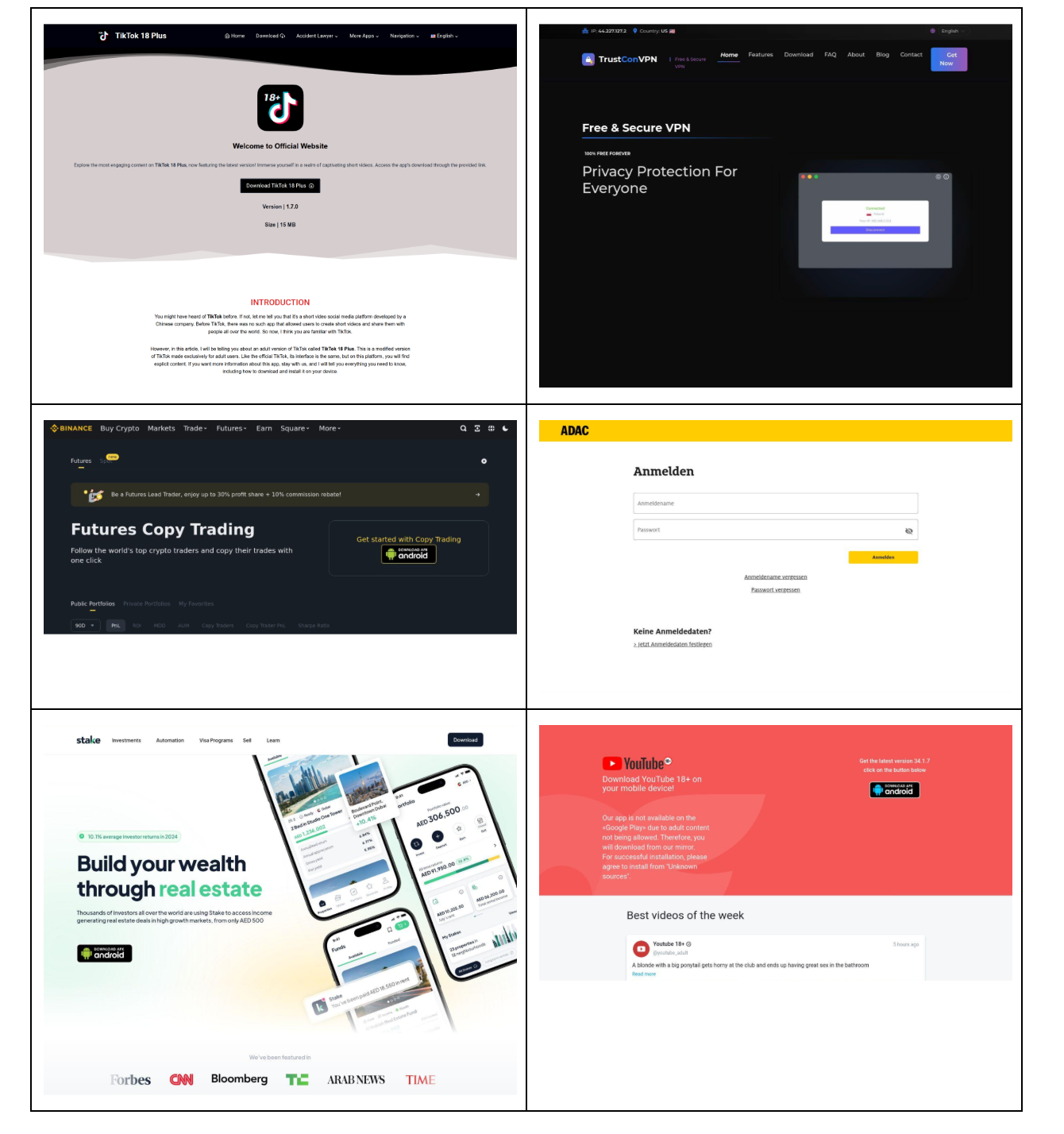
Starting in September 2024, a financially motivated cluster of more than 80 spoofed domain names and lure websites began targeting users with fake applications and websites themed as government tax sites, consumer banking, age 18+ social media content, and Windows assistant applications. The actor used these spoofed domains to deliver Android and Windows trojans likely for the purpose of stealing credentials or more overtly through the use of fake login pages.

🔗

Learn more here

What We’re Reading

In case you’re behind on your cybersecurity reading homework, DTI team member Ian Campbell’s monthly recommended reading list is sure to get you up to speed!

📚

Checkout the full reading list here

Where We’ll Be

  • AFCEA Vegas Tech & Cyber Expo, Las Vegas, NV, 4-5 November
  • CYBERWARCON, Washington, DC, 19 November

Final Thoughts

As always, thank you to my returning readers! If you’re new, I hope you found this newsletter informational, helpful, and worthy of sharing with your peers. And of course I hope you will keep coming back to read future editions!

We share this newsletter via email as well – if you’d prefer to get it to your inbox, sign up here.

If you missed last month’s content, here are some quick links:

Thanks for reading – see you next month!

-Daniel

https://www.linkedin.com/in/schwalbe

https://infosec.exchange/@danonsecurity
Learn More
Newsletters
Newsletter Number 9, Keep On Movin' Down The Line

My team has been on a tear this month, we've published new research on Salt Typhoon, an advanced Chinese APT, and we've analyzed the massive Kimsuky leak, giving us a rare look into a North Korean threat actor's playbook. We also identified new activity from the PoisonSeed e-crime group, and uncovered a banking trojan targeting Android users in Southeast Asia. Let's get you up to speed!

Subscribe to the Newsletter here

September is coming to a close, and with it, the sun bids adieu to Seattle (my home base) for another six months or so. Anybody who has lived here for more than a couple of years can recognize the exact day it happens. It’s a different date every year, but it’s unmistakable! In just 24 hours, it goes from pleasantly sunny, low 70s weather (low 20s C for my international friends) to min-50s (mid-teens in C) and rain. Summer is over, and the grey gloom returns to give birth to the Pumpkin Spice Latte. That day was yesterday 😕

But it’s not all bad. With less available daylight, we give ourselves permission to spend more time inside, and that means more time for research! If you are a returning reader, welcome back! If you are a new reader, what you are about to read is news from our group of researchers and analysts, where they provide their expertise in investigating, mitigating, and preventing Domain and DNS based attacks.

My team has been on a tear this month, we've published new research on Salt Typhoon, an advanced Chinese APT, and we've analyzed the massive Kimsuky leak, giving us a rare look into a North Korean threat actor's playbook. We also identified new activity from the PoisonSeed e-crime group, and uncovered a banking trojan targeting Android users in Southeast Asia. Let's get you up to speed!

Hot off the Presses

Inside Salt Typhoon: China’s State-Corporate Advanced Persistent Threat 

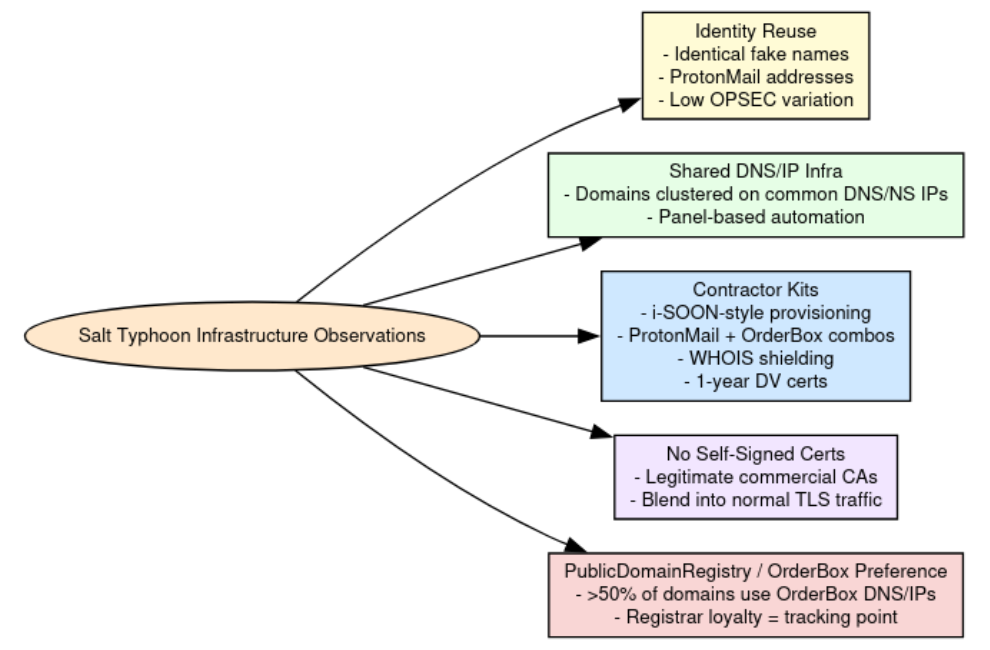
Less than a week ago (25 September), we published research that maps Salt Typhoon’s infrastructure and operational profiles. The APT linked to the PRC’s Ministry of State Security has a targeting profile that spans the U.S., U.K., Taiwan, and the E.U., with confirmed breaches in at least a dozen U.S. telecom firms, multiple state National Guard networks, and allied communications providers. The research covers known intelligence and operational profiles, links to other entities within the PRC’s cyber espionage apparatus, and a deep dive into the infrastructure and behavioral patterns uncovered by our researchers. 

Salt Typhoon has demonstrated sophisticated spycraft in exploiting network edge devices, maintaining long-dwell persistence via firmware/rootkit implants, harvesting data from telecom providers, and using plausibly deniable contractor infrastructure to obscure attribution. Our research provides crucial intelligence for attribution, detection, and threat modeling of the observed activity.

🔗Read the full report here

Inside the Kimsuky Leak: How the “Kim” Dump Exposed North Korea’s Credential Theft Playbook

DTI researchers broke down the “Kim” leak, mapping the full scope of the North Korean threat actor’s infrastructure from custom Linux rootkits to particular targets like PKI infrastructure and specific tools like NASM and ocrmypdf. Our analysis also found a strategic pivot to include Taiwanese developer and government networks, revealing a clear geographical expansion of North Korea's cyber interests.

The leak provides a unique opportunity to look directly into a DPRK threat actor’s playbook. Moreover, it gives analysts and defenders insight into the actor’s operational profile, including credential-focused intrusions targeting South Korean and Taiwanese networks, with a blending of Chinese-language tooling, infrastructure, and possible logistical support.

🔗Read the full analysis here

—-----

Newly Identified Domains Likely Linked to Continued Activity from PoisonSeed E-Crime Actor

DTI researchers identified a set of malicious domains likely linked to the e-crime group known as PoisonSeed. The identified domains spoofed the email sender platform SendGrid and used fake Cloudflare CAPTCHA pages to steal enterprise credentials, with similar tactics, techniques, and procedures (TTPs) as those historically tied to SCATTERED SPIDER. 

While there is no definitive evidence of a direct link between PoisonSeed and SCATTERED SPIDER, the infrastructure identified as belonging to PoisonSeed highlights ongoing efforts by e-crime actors to use TTPs similar to SCATTERED SPIDER. These actors are likely continuing to leverage these TTPs to compromise enterprise credentials to facilitate a range of malicious activity.

🔗Learn more here

Banker Trojan Targeting Indonesian and Vietnamese Android Users

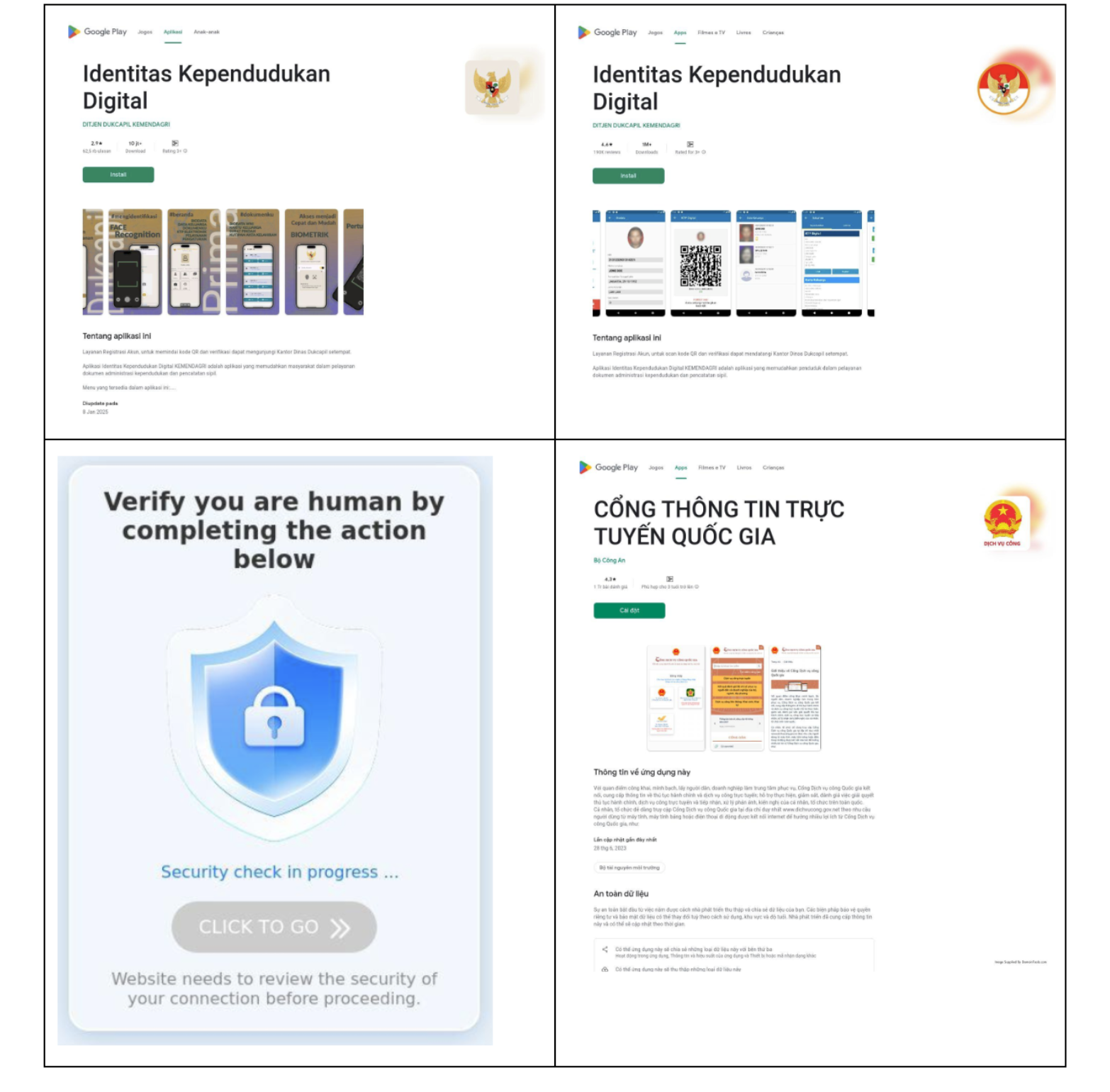
DTI researchers observed a threat actor spoofing trusted platforms like the Google Play Store to target  Android users in Southeast Asia. The actor disguised their malware as legitimate payment and government identity applications to trick Indonesian and Vietnamese users into downloading malware linked to BankBot.Remo.1.origin, a previously closed source banking trojan that had its source code leaked on Russian-language forums in 2016.

🔗Learn more here

—-----

What We’re Reading

With the arrival of fall, and back to school season in full swing, it got me thinking: Wouldn’t it be great if there were a scholastic book fair for cybersecurity? Well there isn’t, but there is my colleague Ian Campbell's monthly recommended reading list for September:

📚Check out the full reading list here 📚

Where We’ll Be

  • BSidesNOVA, Arlington, VA, 10-11 October
  • GovWare, Singapore, 21-23 October
  • TechNet Indo-Pacific, Honolulu, HI, 28-30 October

Final Thoughts

As always, thank you to my returning readers! If you’re new, I hope you found this newsletter informational, helpful, and worthy of sharing with your peers. And of course I hope you will keep coming back to read future editions!

We share this newsletter via email as well - if you’d prefer to get it to your inbox, sign up here.

If you missed last month's content, here are some quick links:

Thanks for reading - see you next month!

-Daniel

https://www.linkedin.com/in/schwalbe

https://infosec.exchange/@danonsecurity
Learn More
Newsletters
Eight Days a Newsletter: I lo-o-o-ove research!

If you are a returning reader, welcome back! If you are a new reader, what you are about to read is news from our group of researchers and analysts, where they provide their expertise in investigating, mitigating, and preventing Domain and DNS based attacks.So without further ado, here’s what our incredible team has been up to for the rest of August

Subscribe to the Newsletter here

Can you believe August is almost over? Here in the Pacific Northwest, Summer is making its last stand. If the weather professionals are right, we will have another 10 days or so of temperatures in the low 80s (that’s high 20s in Celsius for my international readers), before Fall settles in. As every Seattleite knows, there is that one day in September, when the temperature drops suddenly, and the rain returns, and then it’s another 9 months before the best time of the year comes back. Not that we’re bitter or anything, those 3 months of summer are glorious and make all the rain worth it.

You know where it rarely rains though? Las Vegas! And that’s where the DTI team spent 8 days at the beginning of August for Hacker Summer Camp. Some people will argue that 8 days in Vegas is about 6.5 days too long. And the heat also did not disappoint, every day peaked north 

of 105F, or 40+ in Celsius. But luckily, it’s a dry heat they say 🙄

Our brilliant Marketing team had a great solution to keep us out of the heat: We chartered several shuttle buses that drove back and forth between Black Hat and the hotel where the larger DomainTools contingent stayed. Great advertising and we got to ride in style!

My other van is the DNS express!

Even if you didn’t work for DomainTools, you could catch a free ride. All for the price of being a captive audience and having to watch our demo reel 😎:

Come take a ride in my windowless black van!

The team had a packed schedule, and lots of community events to support! The Diana Initiative, BSides Las Vegas, Sober in Cyber, Black Hat, DEF CON, as well as a handful of other community events and cons that I cannot name publicly - IYKYK.

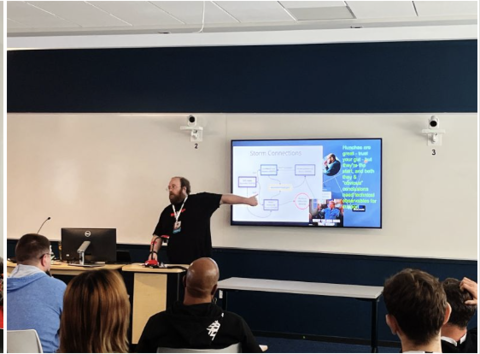
At the end of the week, I had the pleasure to present at DEF CON 33 in the Recon Village. I talked about how to use passive DNS to enumerate subdomains and how to effectively identify deep wildcards:

At the end of the week, I had the pleasure to present at DEF CON 33 in the Recon Village. I talked about how to use passive DNS to enumerate subdomains and how to effectively identify deep wildcards:

Did I mention it was hot? Shorts and T-shirt to the rescue!

My colleagues Ian Campbell and Malachi Walker also presented at DEF CON, together in the Malware Village and Malachi gave a second talk in the BIC Village

While the days were long and hot, and the nights were short and fueled by energy drinks, we loved every minute of it. Hacker Summer Camp is where “our people” meet, and we wouldn't miss it for anything!

If you are a returning reader, welcome back! If you are a new reader, what you are about to read is news from our group of researchers and analysts, where they provide their expertise in investigating, mitigating, and preventing Domain and DNS based attacks.

So without further ado, here’s what our incredible team has been up to for the rest of August:

From Laptops to Laundromats: How DPRK IT Workers Infiltrated the Global Remote Economy

In this post we discuss how the Reconnaissance General Bureau (RGB) of the DPRK orchestrated an operation that used stolen or forged identities to secure tech jobs for their operatives for the purpose of gaining access to intellectual property, and to receive salaries in cryptocurrency.

The article covers key actors like Song Kum Hyok, an officer in the Andariel subgroup, to facilitators who run "laptop farms" to create the illusion that the workers are U.S.-based. The money laundering process is also detailed, showing how funds are routed through front companies and crypto brokers in various countries to convert the fraudulently obtained wages into usable capital for North Korea's strategic programs, including weapons development.

Crypto transfers and money laundering

🔗Learn more here

https://dti.domaintools.com/from-laptops-to-laundromats-how-dprk-it-workers-infiltrated-the-global-remote-economy/?utm_source=LinkedIn&utm_medium=Social&utm_campaign=DTI-Newsletter-August

Hunting for Malware Networks

For this investigation, we took a look at recently active malware-as-a-service (MaaS) operations. We analyzed their use of web-hosted PowerShell scripts as an effective initial-stage payload delivery mechanism. This technique serves to compartmentalize the attack chain, reducing the exposure of core command and control (C2) infrastructure and complicating forensic investigations.

One example detailed in this article centers around a script that connects to a commonly used C2 domain, and was observed distributing over 60 different malicious files in the past 2 months. It included multiple stealer malware families such as Amadey, Lumma, Luca, DeerStealer, and RedLine as well as other malware families like Rugmi, BlackBasta and DarkGate.

The investigation into the broader infrastructure revealed a significant concentration of malicious activity originating from a small number of IP addresses, all associated with the same ASN. It seems likely that this ASN is part of a bulletproof hosting operation.

Additionally, threat actors appear to increasingly be leveraging legitimate distributed services like Amazon CloudFront and GitHub to host and deliver malware. This makes proactive network-based blocking more difficult. 

Analysis of 200 binaries in VirusTotal over the past 3 months show that there appears to be an overrepresentative share of LummaC2 and Amadey.

🔗Go hunting

SpyNote Malware Part 2

The SpyNote malware campaign has resurfaced, and the threat actors are employing deceptive websites that mimic the Google Play Store to trick users into downloading an Android RAT (Remote Access Trojan).

SpyNote is designed for surveillance, data exfiltration, and remote control of a victim's device. Its capabilities include keylogging, stealing 2FA codes, capturing audio and video, and remotely wiping data. This new campaign incorporates minor changes in the actor's tactics, such as slight IP resolution changes and the addition of anti-analysis techniques in the APK dropper to protect the payload from detection.

The malicious websites use JavaScript to initiate the download of a dropper APK. This dropper conceals its functions using DEX Element Injection and decrypts a second-stage SpyNote payload. The payload then loads the command-and-control (C2) logic from a separate file, using obfuscation to hinder static analysis.

Malware execution flowchart

🔗Catch that RAT

Cybersecurity Reading List - Week of 2025-08-25

In this latest installment of his reading list, my colleague Ian Campbell highlights a recent influx of new research and publications in the cybersecurity field. As always, he covers several different types of media, something for everybody:

  • Podcasts: "Adversary Universe from Crowdstrike" for a perspective on AI, "CyberWire Research Saturday" for a deep dive into the VexTrio cybercriminal group, and "Prompt||GTFO" for demonstrations on how practitioners are using AI.
  • Articles: An interview with a Kaseya hacker, and a piece on data exfiltration via DNS.
  • Research Papers and Reports: Greynoise Intelligence study on how attack spikes can precede new CVEs, a RecordedFuture report on cloud threat hunting, and a CAIDA paper on early-stage traffic discovery.
  • Tools and Resources: Learn about CISA's new open-source malware analysis platform, Thorium
  • Entertaining Reading: "The Berners Street Hoax"

🔗Read more here 

Customer Webinar: Exclusive Recap of the DTI Team DEF CON 33 Talks 

For those who couldn't make it to Las Vegas, we're bringing these talks directly to you.

Here's what we'll cover:

  • Malware in DNS: A look at how attackers hide malicious code in DNS TXT records.
  • Pre-Identifying DNS Wildcards: Learn new techniques for subdomain enumeration and attack surface management.
  • DNS Scavenger Hunt: An interactive session where you can put your skills to the test.

Webinar Details:

  • Date: Tuesday, September 30th
  • Time: 10:00 AM PT / 1:00 PM ET
  • Duration: 1.5 hours

Where We’ll Be

  • Underground Economy, France, 1-4 September
  • Back to Las Vegas for private event, September 8-12
    • If you find yourself in the area that week, let us know and we’d be happy to meet up over a refreshing beverage
  • DC Closed Door Session, National Harbor, MD, 17 September
  • Intelligence & National Security Summit, National Harbor, MD, 18-19 September
  • LABScon, Scottsdale, AZ, 17-20 September

Final Thoughts

As always, thank you to my returning readers! If you’re new, I hope you found this newsletter informational, helpful, and worthy of sharing with your peers. And of course I hope you will keep coming back to read future editions!

We share this newsletter via email as well - if you’d prefer to get it to your inbox, sign up here

If you missed last month's content, here are some quick links:

Thanks for reading - see you next month!

Daniel 

https://www.linkedin.com/in/schwalbe

https://infosec.exchange/@danonsecurity
Learn More
Newsletters
Seven Nation Newsletter: I'm goin' to Wichita!

If you are a returning reader, welcome back! If you are a new reader, what you are about to read is news from our group of researchers and analysts, where they provide their expertise in investigating, mitigating, and preventing Domain and DNS based attacks.

Subscribe to the Newsletter here

OK, maybe not Wichita. But just one week from now, many of us will gather on the surface of the sun (Vegas in August) for Hacker Summer Camp. 

Speaking of Hacker Summer Camp - Come see my talk at DEF CON 33 in the Recon Village, on Friday, August 8 at 2:10pm. I’ll be demonstrating some methods for efficiently assessing a domain’s DNS wildcard status, and proposing a new “standard of care” for routine testing and logging of the wildcard status of ALL (FQDN, RRtype) combinations.

If you are a returning reader, welcome back! If you are a new reader, what you are about to read is news from our group of researchers and analysts, where they provide their expertise in investigating, mitigating, and preventing Domain and DNS based attacks.

So without further ado, here’s what our incredible team has been up to in July:

Malware in DNS: A Covert Delivery Mechanism

Our researchers discovered instances where executable files are stored in fragments within DNS TXT records, allowing them to persist until removed or overwritten. A notable finding, first observered between  2021 and 2022, involved "Joke Screenmate malware." Delivered via this method, it simulates destructive actions and interferes with user control. Additionally, we also found malicious Powershell scripts, acting as stagers for Covenant C2 servers, encoded in TXT records. This highlights a sophisticated technique used by actors to store and potentially deploy malware, with related C2 domains observed as far back as 2017.

Powershell script that acts as a stager

🔗Read more here

Chinese Malware Delivery Domains: Part III - The "SilverFox" Campaign

We’re continuing to track "SilverFox," a persistent cyber actor primarily operating during Chinese working hours. Since June 2023, SilverFox has established over 2,800 domains for malware delivery, targeting Chinese-speaking individuals globally. The campaign focuses on delivering Windows-specific malware through fake application download sites and deceptive update prompts. It utilizes spoofed login pages for various apps, including marketing, business sales, and cryptocurrency platforms. Operational changes by the actor include anti-automation measures, reduced site trackers, increased server distribution, and discreet registration details. As of June 2025, a significant number of identified domains were actively distributing malware. The motivations are largely suspected to be financial, including credential and financial theft, and potentially access brokering.

🔗Find that fox 

Where Everybody Knows Your Name: Observing Malice-Complicit Nameservers

Monitoring nameservers associated with malicious activities offers valuable insights into cybercrime ecosystems. Our team highlights the Russian bulletproof hosting service DDoS-Guard as a key area of focus, due to its links to criminal activity, terrorism, and espionage. A month-long analysis (13 May - 11 June, 2025) of DDoS-Guard's nameserver activity revealed thousands of domain transfers, creations, and deletions. They can be categorized into gambling/betting, cryptocurrency-targeting, and other malicious activities.

Using aged domains and sophisticated obfuscation techniques, examples included Indonesian gambling, phishing campaigns targeting gift card holders, and extensive malicious activity against CounterStrike: GO players,. The most active threats were observed within the cryptocurrency sphere, with domains emulating legitimate wallets and exchanges. Monitoring such nameservers can help establish behavioral patterns of malicious actors, and is recommended for digital asset and cryptocurrency services in order to identify and block associated domains.

🔗Name that nameserver 

Iran's Intelligence Group 13: A Profile of a Covert Cyber Strike Unit

Iran's Intelligence Group 13 is a covert cyber strike unit embedded within the Shahid Kaveh Cyber Group, part of the Islamic Revolutionary Guard Corps (IRGC) cyber arsenal. This group is characterized by its aggressive operations, ideological motivations, and positioning at the intersection of cyber-espionage, industrial sabotage, and psychological warfare. Our report assesses that Intelligence Group 13 is likely to be used for retaliatory digital operations, especially following recent U.S. airstrikes. The research details the group's hierarchy within the IRGC, including leadership figures like Hamidreza Lashgarian and Reza Salarvand. We also cover tradecraft, which includes disrupting critical infrastructure, pre-positioning malware, and aggressive intelligence collection. A key strategy is the integration of psychological warfare through propaganda fronts like CyberAveng3rs. The group is supported by an extensive ecosystem of contractors and front companies, which frequently rebrand to evade sanctions. Future campaigns are expected to blend cyber-kinetic threats with narrative manipulation, targeting critical infrastructure, public perception, and institutional trust.

🔗Learn more here

Where We’ll Be

Final Thoughts

Again, if you’re a returning reader from last month, I thank you. If you’re new, I hope you found this newsletter informational, helpful, and worthy of sharing with your peers. 

We share this newsletter via email as well - if you’d prefer to get it to your inbox, sign up here

If you missed last month's content, here are some quick links:

Thanks for reading - see you next month!

Daniel 

https://www.linkedin.com/in/schwalbe/

https://infosec.exchange/@danonsecurity
Learn More
Newsletters
It's 6’n the Mornin’ (and my Newsletter at your door!)

Where has this year gone?! We are six months into formally launching DomainTools Investigations (DTI) and subsequently this newsletter! If you’re a returning reader, I’m glad you keep coming back! If you’re a new reader, what you’re about to read is news from our group of researchers and analysts providing their expertise in investigating, mitigating, and preventing Domain and DNS based attacks.

Subscribe to the Newsletter here

Where has this year gone?! We are six months into formally launching DomainTools Investigations (DTI) and subsequently this newsletter! If you’re a returning reader, I’m glad you keep coming back! If you’re a new reader, what you’re about to read is news from our group of researchers and analysts providing their expertise in investigating, mitigating, and preventing Domain and DNS based attacks.

Today, I had the opportunity to listen to a session at FIRSTCon25 where Tom Millar of CISA,  Eireann Leverett of Killara Cyber, Wendy Nather of 1Password, and Declan Ingram of Trust Hound, discussed cyber resilience in the current threat context. One of the core focuses during this session was Community and how cyber resilience is born out of Community. 

The message of Community resonated with me because of our work here with DTI and how great this Community has been through the years. So take a look around, and if you’d like to collaborate with us to get further in our analyses, please let us know. 

So without further ado, here’s what our incredible team has been up to in June:

🐀 Trust Exploited: NetSupport RAT

In our latest research, our team identified malicious multi-stage downloader Powershell scripts hosted on multiple themed websites including Gitcodes and fake Docusign captcha verifications. These sites attempt to deceive users into copying and running an initial powershell script on their Windows Run command. Upon doing so, the powershell script downloads another downloader script and executes on the system, which in turn retrieves additional payloads and executes them eventually installing NetSupport RAT on the infected machines.

🔗 Read more here

🕸️ Skeleton Spider (FIN6): Trusted Cloud Malware Delivery

This research combines technical insights and practical analysis for both general audiences and cybersecurity professionals. We examined how FIN6 uses trusted cloud services, such as AWS, to host malicious infrastructure, evade detection, and ultimately deploy malware through socially engineered lures.

🔗 Explore here

🛰️ Mapping Hidden Alliances: Russian-Affiliated Ransomware Ecosystems

Jon DiMaggio at Analyst1, Scylla Intel, and our team dove into Russian-affiliated Ransomware Groups. This work follows previous research DomainTools undertook in tracking ransomware families and provides a visual representation of hidden connections between criminal factions, going beyond just mapping “families” to understand the intricate relationships between them. The core focus was on identifying overlaps in human operators, code fragments, infrastructure, and TTPs.

Jon and I presented this at SLEUTHCON - to see our presentation, 👍& 🔔to the SLEUTHCON YouTube page.

🔗 Dive into the mapping

Cybersecurity Schlolastic Book Fair

Ian Campbell’s June Recommended Reading digest: 

📚Click for the full list

Where We’ll Be

Final Thoughts

Again, if you’re a returning reader from last month, I thank you. If you’re new, I hope you found this newsletter informational, helpful, and worthy of sharing with your peers. 

We share this newsletter via email as well - if you’d prefer to get it to your inbox, sign up here

If you missed last month's content, here are some quick links:

Thanks for reading - see you next month!

Daniel 

https://www.linkedin.com/in/schwalbe

https://infosec.exchange/@danonsecurity
Learn More
Newsletters
Newsletter No. 5: A Little Bit of Research in my life…

Subscribe to the Newsletter here

I can’t believe it, but we have made it to the 5th iteration of my DomainTools Investigations (DTI) newsletter! If you’re a returning reader, I’m glad you keep coming back! If you’re a new reader, what you’re about to read is top secret. Anything you say can and will be used against you without express written consent of Major League Baseball. That’s the saying, right? 

But seriously, if you’re a new reader, welcome! What you’re really about to read is not top secret; it’s news from our group of researchers and analysts providing their expertise in investigating, mitigating, and preventing Domain and DNS based attacks.

Community is incredibly important to me, and I believe that the only way we’ll make progress in fighting threat actors is coming together to share what we know. So take a look around, and if you have information to collaborate with us to get further in our analyses, please let us know. 

So without further ado, here’s what we’ve been up to in May:

🔥HOT OFF THE PRESSES

Published this week (May 28), DTI shared its latest analysis on a malicious campaign using a fake website to spread VenomRAT, a Remote Access Trojan. The research examines attackers’ methods, such as deceptive websites and command infrastructure, indicating a clear intent to target individuals for financial gain by compromising their credentials, crypto wallets, and potentially selling access to their systems.

Bitdefender Antivirus for Windows download page highlighting features, customer reviews, and security awards.

Why is This Important? This campaign highlights a growing trend: attackers crafting modular, open-source-based malware that’s stealthy, flexible, and easy to deploy. This DIY malware model helps them move fast and stay hidden.

While open-source tools can aid defenders in detection, the real victims are everyday users—targeted with fake login pages and malware disguised as trusted software, all aimed at draining bank accounts and crypto wallets.

Read the full analysis here

Objects May Be More Malicious Than They Appear

DTI observed an unknown actor continuously creating malicious Chrome Browser extensions since February, 2024. The websites masqueraded as legitimate services, productivity tools, ad and media creation or analysis assistants, and more to direct users to install corresponding malicious extensions on Google’s Chrome Web Store. The extensions had a dual functionality, where they appeared to function as intended, but also connected to malicious servers to send user data, receive commands, and execute arbitrary code.

DeepSeek AI Chrome extension page promoting AI chat for writing, planning, learning, and real-time answers across websites.
Example: A DeepSeek Chrome Extension themed lure website ‘deepseek-ai[.]link’

Why is This Important? The actor’s persistence and the time lag in detection and removal pose a threat to users seeking productivity tools and browser enhancements. All users should protect themselves by exercising caution when installing extensions. Stick to the Chrome Web Store and verified developers, carefully review requested permissions, read reviews, and be wary of lookalike extensions.

Read the full analysis here

Threat Actors Love a Good Viral Event

Viral media events capture global attention. Everything from natural disasters to geopolitical shifts to cultural phenomena can dominate headlines and online conversations – and bad actors pay attention and look to capitalize on the public’s interest. 

We undertook a project to analyze scam and malicious domains that emerge in the wake of high-profile viral media events. Leveraging AI-driven research capabilities, we aimed to understand how threat actors exploit these moments for financial gain and other nefarious purposes.

LAFIRE digital token site promoting crypto donations to a fire relief wallet with Bitcoin-inspired coin graphics.
lafire[.]io is another website attempting to pawn off scam crypto coin LAFIRE as a donation fund tactic.

Why is This Important? The speed at which these events unfold provides a fertile ground for scammers to deploy a variety of schemes primarily focused on financial exploitation through fake donations, merchandise sales, and cryptocurrency scams. Staying vigilant and critically evaluating any website or domain seeking engagement related to a viral event is crucial

Read the full analysis here

Cybersecurity Scholastic Book Fair

Wouldn’t that be awesome if one of the conferences decided to do a 90s-style Scholastic book fair for cybersecurity and infosec books? One can dream, but until then, here are some of the topics from Ian Campbell’s May Recommended Reading digest: 

Be sure to check out the reading list for Ian’s full recommendations!

Final Thoughts

Again, if you’re a returning reader from last month, I thank you. If you’re new, I hope you found this newsletter informational, helpful, and worthy of sharing with your peers. 

We share this newsletter via email as well – if you’d prefer to get it to your inbox, sign up here

If you missed last month’s content, here are some quick links:

Thanks for reading – see you next month!

Daniel 

https://www.linkedin.com/in/schwalbe

https://infosec.exchange/@danonsecurity
Learn More
Newsletters
1, 2, 3, 4 Tell Me That You Love Newsletters

Subscribe to the Newsletter here

Welcome to the fourth iteration of my DomainTools Investigations (DTI) newsletter! I’m glad you’re back – and if you’re new, what you’re about to read is news from our group of researchers and analysts providing their expertise in investigating, mitigating, and preventing Domain and DNS based attacks.

Before we begin, you may have noticed some of my Carmen Sandiego-inspired social posts about where I’ve been traveling recently. I thought I’d take a moment to catch you up on where I’ve been (scroll to the end of the newsletter to see where I’ll be coming up in the next few weeks).

April is Spring Break Season for most of the United States. We usually meet up with other members of the extended family somewhere in the country, and explore new places. This year, we chose New Mexico, the Land of Enchantment™. I had never been, and I’malways excited to check a new state off my list (this makes number 30 for me!).

We flew into Albuquerque, and checked out a few locations from the TV Show Breaking Bad. 

Breaking Bad scene parody with Walter White outside Los Pollos Hermanos window under a sign reading Walter’s Booth.
Los Pollos Hermanos and “Walter’s booth”

Then we move on to Santa Fe, which besides being the State capital, it’s also a fun place with lots of interesting places to see. Meow Wolf, the underground art collective and immersive experience was definitely one of the highlights!

Front entrance of Meow Wolf art installation with colorful sign, murals, and unique sculptures above the building.
The original Meow Wolf location in Santa Fe, NM

Another highlight was the visit to the Puye Cliff Dwellings, a settlement that was inhabited as early as 900 AD. The dwellings on top of the mesa top were their summer homes, whereas the cliff side dwellings (partially carved into the cliffs) were the winter homes.

Ancient cliff dwellings at Bandelier National Monument in New Mexico, with ladders leading to carved cave homes.

The Puye is great because it has many ancient ruins, but also a few examples of buildings that are accurate reproductions of the original dwellings.

Visitor inside a low-ceiling ancient dwelling at Bandelier National Monument, wearing a cap and plaid shirt.
Our guide told us the original inhabitants were much much shorter than the average person today.

The one thing I didn’t realize until on day two of the trip, when I got a pretty bad headache that wouldn’t go away, is that Santa Fe is at around 7000 feet elevation. As a sea level dweller for over half of my life, I got a nasty case of altitude sickness! Drinking lots of water helped, but it took a bit to acclimate. This concludes this month’s travel round-up, let’s jump into what the DTI team has been up to since my last newsletter:

The Domain Event

In case you missed it, DTI published its inaugural Domain intelligence year-in-review report (cue the confetti!🎉). 

In the cybersecurity community, it’s generally accepted that the threat landscape is fast paced and ever-evolving. It turns out however that there are a few constants that rarely change: Domains and DNS are on top of that list. The purpose of this report is to illuminate Domain patterns and DNS infrastructure created by cybercriminals in order to collectively improve the community’s defenses.

What were some of the key findings, you may be asking yourself? 

  • Risk Scoring Detection Techniques: the likelihood of a Domain’s proximity to malware, phishing, spam, etc. to enable prioritization for further investigation and analysis.
  • Keyword Analysis of Threat Detection: clear patterns of newly created Domain names that included frequently included terms such as “phishing,” “fraud,” “bitcoin,” “scam,” and others. 
  • High Publicity Event Exploitation: large events spurn Domain registration including elections/politics, technological advancements, natural disasters, social movements, and so on. 
  • Commonalities in Malicious Domain Attributes: recurring patterns in preferred registrars, ISPs, nameservers, and SSL issuers used by malicious domains.
  • Analysis of Newly Registered Top Level Domains (TLDs): analysis to understand how threat actors utilize new TLDs (.lifestyle, .vana, .living, .music – to name a few) in their campaigns. 

Want more? Of course you do! Find the full report here

Looking for more of a highlight reel? Find the summary blog post here.

April Was Showered with Research

The team was busy during the month of April, which makes me extremely proud. In case you missed it, here’s what the team worked on: 

Get Your Kicks with Proton66

In this analysis, DTI explores Proton66, a Russian bulletproof hosting provider that supports cybercriminal activities by ignoring abuse complaints. It highlights the activities of Coquettte (the three T’s are not a typo), an emerging threat actor using Proton66’s infrastructure to distribute malware and engage in illicit projects, including a website hosting guides on manufacturing illegal substances. 

A screenshot of a fake cybersecurity website, cybersecureprotect[.]com, masquerading as a legitimate antivirus service

Why is This Important? This analysis sheds light on the infrastructure supporting cybercriminal activities, specifically through Proton66. By understanding how threat actors like Coquettte operate and utilize such services, cybersecurity professionals can better detect and mitigate these threats.

Read the full analysis here

Harriet the SpyNote Malware

Here, we looked at how deceptive websites hosted on newly registered domains are being used to distribute SpyNote malware. These sites mimic the Google Chrome install page on the Google Play Store to trick users into downloading SpyNote, a potent Android remote access trojan (RAT) used for surveillance, data exfiltration, and remote control. The research details the common patterns in domain registration, website structure, and malware configurations, noting the use of both English and Chinese-language delivery sites as shown below: 

Google Play store pages showing Google Chrome app and a Chinese live streaming app with install and review details.

Why is This Important? SpyNote is a potent Android remote access trojan (RAT) that can steal sensitive data, including personal information, financial details, and credentials. Understanding its distribution methods helps in developing better defenses.

Read the full analysis here

Juiced Up and AI Sloppy

I can’t resist the opportunity to reference a Rolling Stones song – especially when it comes to the idea of AI slop. Here, we illustrate how deceptive browser extensions within the Google Store manipulate ratings and transmit user data. These extensions, often promoted through newly registered websites, pose significant privacy and security risks and this analysis highlights common traits among these extensions, such as manipulated reviews and external data transmission, and provides insights into identifying suspicious extensions by examining their code and user feedback. 

DeepSeek AI Chat Chrome extension page highlighting features like private browsing, AI chat, and secure conversations.
Chrome Extension “DeepSeek AI Chat”: Purports to add DeepSeek AI chat to your browser

Why is This Important? These extensions could transmit sensitive user data without consent, leading to privacy breaches (a topic I’m incredibly passionate about). It also helps security practitioners to potentially identify and remove malicious extensions and helps maintain the integrity and security of users’ browsing experiences.

Read the full analysis here

Book It

Remember that program from Pizza Hut? Getting rewarded for reading by getting some free pizza? I can’t give everyone a free pizza for reading Ian Campbell’s reading list digest, but I promise you the reward is becoming a better defender through shared knowledge (and that lasts way longer than pizza!)

Some of the topics Ian included in his recent reading lists include:

Be sure to check out the reading list for his full recommendations!

Where We’ll Be

  • TechNet Baltimore – May 6-8
    • Catch my colleague, Malachi Walker, and the DomainTools Federal team at this three-day event
  • GISEC – Dubai – May 6-8
    • For those who will be in this neck of the woods, come find me here – I’d love to say hi!
    • I’ll be presenting “Trends in Malicious Domain & DNS Infrastructure” on May 6 beginning at 2:05PM in Hall 6 on the Xlabs stage. Learn more here.
  • Closed Door Session (Invite-Only, TLP:RED research – say I referred you)
    • Washington DC, June 5
  • SleuthCon June 6
    • DomainTools is one of the sponsors for this event and Malachi will be present here, too!
    • I’ll also be presenting “Seeing is Believing: A Visual and Analytical Map of Russian-affiliated Ransomware Groups” with Analyst1’s Jon DiMaggio. Learn more here

Final Thoughts

Again, if you’re a returning reader from last month, I thank you. If you’re new, I hope you found this newsletter informational, helpful, and worthy of sharing with your peers. 

We share this newsletter via email as well – if you’d prefer to get it to your inbox, sign up here

If you missed last month’s content, here are some quick links:

BUT WAIT. There’s more! Would you like to hear more about our Russian disinformation research? In this episode of the Breaking Badness Cybersecurity Podcast, I chat with disinformation expert, Scot Terban, about how Russian threat actors are evolving their playbook to mimic small-town US newspapers to push propaganda. Find the recording here.

Thanks for reading – see you next month!

Daniel 

https://www.linkedin.com/in/schwalbe

https://infosec.exchange/@danonsecurity
Learn More
Newsletters
March 2025 DTI Newsletter: I Like Newsletters and I Cannot Lie

Subscribe to the Newsletter here

This is my third iteration of the DomainTools Investigations (DTI) newsletter, so I think by the power invested in self-help books everywhere, I have fully formed a habit (*pats self on the back*).

I’m glad you’ve stuck around to read DTI news from our group of researchers and analysts focused on providing their expertise in investigating, mitigating, and preventing domain- and DNS-based attacks.

We are now one quarter in since launching DTI and we’ve covered a lot of ground in such a short amount of time. In fact, here’s something we posted just moments ago…

HOT OFF THE PRESSES

Just prior to hitting ‘publish’ on this newsletter, the DTI team shared new research regarding a large-scale phishing infrastructure heavily focused on defense and aerospace entities with links to the conflict in Ukraine. There’s no actor currently attributed to this activity, but available evidence indicates this activity is motivated by cyber espionage, with an emphasis on intelligence collection.

Mailu webmail and admin login page with email and password fields, built using Flask and AdminLTE.
Image of a likely phishing page hosted on the domain kroboronprom[.]com a domain spoofing Ukroboronprom, Ukraine’s largest arms manufacturer.

Why is This Important? This movement is critical to pay attention to as it’s not only intelligence gathering relating to the conflict in Ukraine, but the targets have provided support to Ukraine’s military efforts in its conflict with Russia.

Read the full analysis here

The Domain Event for Disinformation

We’ve said it before and we’ll say it again: as we iterate our tactics and techniques as defenders, so do malicious actors. We recently found that Russian actors are evolving in how they spread disinformation by exploiting specific registrars, hosting providers, and domain obfuscation techniques to evade detection.

Chart showing domain registrars like Namecheap, Reg.ru, and Epik used in disinformation and political influence campaigns.
Commonly used registrars of Russian disinformation actors

Why is This Important? As cyber defenders, journalists, and policymakers, it is crucial to stay ahead of these evolving tactics and disrupt their ability to weaponize domain infrastructure for disinformation.

Read the full analysis here

Reading Rainbow

Reading Rainbow opening title
Via Giphy

That was one of the best shows, right? I can’t share a reading list without mentioning that show and then getting the theme song stuck in my head. 

My colleague, Ian Campbell, graciously puts together a reading list on what the DTI folks are currently reading/listening to (audiobooks count, people!) 

The goal is to not only share what we’re finding, but to share the findings of others – that’s how we get better as defenders. 

Some of the topics Ian included in his recent reading lists include:

Be sure to check out the reading list for his full recommendations!

Where We’ll Be

  • Closed Door Sessions (Invite-Only, TLP:RED research – say I referred you)
    • Austin – 01 April
    • Boston – 03 April
    • San Francisco – 29 April
  • FIC – 01 to 03 April
  • BSides SF – 29 April
    • My colleague, Austin Northcutt, and I will present WHOIS Your Daddy: Tracking Iranian-backed cyber operations with Passive DNS at 1:30PM PT on 4/26
    • THREE DTI folks at BSides SF? Yep! Malachi will also be there presenting Something’s Phishy: See the Hook Before the Bait
  • RSAC – 28 April – 01 May
    • Meet me and the DTI team at RSAC!

Final Thoughts

Again, if you’re a returning reader from last month, I thank you. If you’re new, I hope you found this newsletter informational, helpful, and worthy of sharing with your peers. 

We share this newsletter via email as well – if you’d prefer to get it to your inbox, sign up here

If you missed last month’s content, here are some quick links:

Chinese Malware Delivery Domains Part II: Data Collection

BUT WAIT. Would you like to hear more about our Chinese malware research? In tomorrow’s episode of the Breaking Badness Cybersecurity Podcast, I chat with Wes Young from CSIRTS Gadgets about what DTI found and how he iterated on the information shared. Here’s a teaser for your viewing pleasure, but get the whole episode tomorrow at 9AM PT!

Thanks for reading - see you next month!

Daniel 

https://www.linkedin.com/in/schwalbe

https://infosec.exchange/@danonsecurity
Learn More
Newsletters
Guess who's back, back again? DTI’s back, tell a friend!

Subscribe to the Newsletter here

Well hello there! If you are a returning reader, that likely means you found this information beneficial to your organization or all of my jokes last month absolutely KILLED. Or all of the above! Either way, welcome back!

If you’re new around these parts, I’m Daniel Schwalbe, CISO and Head of Investigations at DomainTools, and the purpose of this newsletter is to share an overview of what my team at DomainTools Investigations (DTI) has worked on in the past month. 

Before we dig into that, I recently returned from a trip to Japan with my family. It was a whirlwind tour, but even my teenagers loved it! Here’s some of the cool things we did:

We started out in Tokyo, where we met up with an old high school friend of mine who’s been living there for more than two decades. He gave us a crash course in Tokyo’s excellent public transit system.

People looking at a Beijing subway map inside a metro station, planning travel routes across the city transit system.
(Pro Tip: Add an “IC Card” to your Smart Phone to pay at the turnstiles – We used Suica, and it’s a game changer!)

He showed us around Shinjuku, Roppongi, Akihabara (“Electric Town”), Musashino, Setagaya, and Shibuya.

Crowds crossing Shibuya Scramble in Tokyo at dusk, surrounded by neon billboards and iconic city skyscrapers.
The “Shibuya Scramble” is a must-see!

Next, we took the Shinkansen (the “bullet train”) to Hiroshima to pay our respects, followed by stops in Osaka (the Cup Noodle Museum was fun!) and Kyoto (check out Nishiki Market). We stopped by some of the locations featured in the recent “Shōgun” TV Series, and ate local specialties (Okonomiyaki, Katsu). Speaking of food, it was amazing: Sushi, Ramen, Teppanyaki, Shabu Shabu, Sukiyaki, the list goes on. 

If you are into shopping, the Don Quijote stores are amazing (and a little overwhelming)!

Person posing with a large plastic Hello Kitty statue
Obligatory picture with one of Japan’s most famous ambassadors

We departed Tokyo at 6pm, and arrived on the west coast at 10am the same day. Time Travel is real, but so is jet lag. Good thing I’m going to Europe soon – read on for more. But enough about my recent travels, let’s jump into what the DTI team has been up to since last month’s newsletter:

RATs! There’s More to Say on Chinese Malware

There’s more to say on this topic, which we covered in our inaugural newsletter, examining a second cluster of over 1100 domains suspected to have been registered by the same group between April 2024 to January 2025. Very similar to Cluster 1, Cluster 2 involves spoofs of many common applications from messenger apps, VPNs, cryptocurrency exchanges, gaming platforms, game emulators, online gambling, web browsers, and multimedia apps.

Why Is This Important? A crucial aspect of this investigation lies in recognizing the broader implications of the observed tactics. By proactively studying and understanding these techniques now, the cybersecurity community can better prepare for similar threats that may emerge.

Collage of six Chinese and English website homepages featuring browsers, security tools, and software services
A small sample of the spoofed download websites over the past 60 days.

Get the full scoop and IOCs here.

Yes And…

CSIRT Gadgets took a look into parts I and II of this Chinese malware story and

  1. Their writing is pretty hilarious (10/10 would read again) and, 
  2. They used a tool called AlphaHunt to find likely linkable attribution (though YMMV).

Based on what DTI sees and what others in the community have reported, AlphaHunt makes the argument that this threat actor could be the SilverFox APT group. 

Take a gander – let us know what you think. We’ve already ruled out other silver foxes like George Clooney and Patrick Dempsey, but can you contribute any additional findings that this is indeed the SilverFox APT group?

Cheers to the Good Guys

The Justice Department published a release in late January regarding seizing servers of the Pakistan-based threat group known as the Manipulaters (and that is how “they” spell).

You may recall last year DomainTools Research looked into this group previously thought to be dormant and found they were very much back to their old tricks – with some new ones thrown in there. The FBI and the Justice Department’s Criminal Division, in cooperation with law enforcement partners in the Netherlands, have taken down 39 domains and related infrastructure linked to this group! Chalk one up to the good guys!

Find our research here, updated to reflect this takedown.

Double Secret Probation Webinar

It’s not actually that secret; you just need to be an existing DomainTools customer to attend. I’ll moderate this discussion with DTI team members Steve Behm and Austin Northcutt as they use our domain and DNS intelligence platform to demonstrate how to stay ahead of Business Email Compromise (BEC) using the example of TA4903, a financially motivated threat actor with notoriously high campaign volume. 

BUT WAIT! There’s more! After the webinar concludes, attendees can get a 14-day trial for the tools we showcase in the demonstration, if they don’t currently have access to them.

DomainTools customers can save their spots here

DomainTools webinar on using domain and DNS intelligence against BEC, March 20, 2025, with Schwalbe, Behm, Northcutt.
TA4903 and Me: Using Domain and DNS Intel Against BEC – a DomainTools Customers Exclusive Webinar

Where We’ll Be

  • NICAR – 06 March
    • I’ll be teaching a workshop with my colleague, Kelly Molloy
    • Finding the Story Using DNS search for investigative journalism
  • DCC – 10 to 13 March
    • IYKYK. Come say “Hi” if you are attending.
  • Closed Door Sessions (Invite-Only, TLP:RED research – say I referred you)
    • Seattle – 26 February (almost at max capacity)
    • Austin – 01 April
    • Boston – 03 April
  • FIC – 01 to 03 April

Final Thoughts

Again, if you’re a returning reader for last month, I thank you. If you’re new, I hope you found this newsletter informational, helpful, and worthy of sharing with your peers. 

We share this newsletter via email as well – if you’d prefer to get it to your inbox, sign up here

If you missed last month’s content, here are some quick links:

Account Trafficking Websites in December 2024

Chinese Malware Delivery Websites

CTI Grapevine Becomes DomainTools Investigations

Cyberhaven Breach Likely Part of a Long-Term Criminal Campaign

Thanks for reading – see you next month!

Daniel 

https://www.linkedin.com/in/schwalbe

https://infosec.exchange/@danonsecurity

Learn More
Newsletters
DT Investigations - Security Research for the Community

Subscribe to the Newsletter here

Hello DTI Friends!

I should start by introducing myself, as that’s how all the best relationships start (or so I’m told). 

If we haven’t yet had the opportunity to meet, I’m Daniel Schwalbe, CISO and Head of Investigations at DomainTools. I’ve spent the greater part of two decades tracking cybercriminals and nation-state actors in higher education, government, and large enterprises. I’m very passionate about sharing actionable insights with the community, which is what brings me to your feed today. 

We launched DomainTools Investigations (DTI) on January 9 to turn our philosophy of supporting the community into reality. It’s a program with a coterie of researchers and analysts focussed on providing their expertise in investigating, mitigating, and preventing Domain- and DNS-based attacks. The goal is to do so on an ongoing basis, and we’ve already covered a bunch of ground since that announcement! 

Let’s catch up on what we’ve shared so far: 

HOT OFF THE PRESSES

You heard it here first! We JUST published a report examining the illicit market for aged and verified accounts across social media, email, and advertising platforms which represent a persistent and evolving threat. 

Why this is important: The activity highlights the urgent need for enhanced security measures, proactive threat intelligence, and increased awareness to combat the acquisition and exploitation of these compromised accounts.

Get the full scoop and IOCs here.

Where There’s One RAT, There’s A Nest

We recently shared details on Chinese malware delivery sites – hundreds of newly registered domains are actively targeting Chinese-speaking users with malware. Our report analyzes this activity, detailing the range of deceptive lures employed, including imitations of messengers, browsers, VPNs, email services, and Adobe software.

GPT Chrome browser download page in Chinese, showing unique interface design and Windows compatibility

Why this is important: We’ve identified the involved malware families to include Gh0stRAT, ValleyRAT, RemKos RAT, LummaStealer, RedLine and others. As I’m sure you’re aware, understanding the patterns of these malware families can help practitioners develop more effective defenses.  

Find the full write-up and list of IOCs here.

Cyber Criminals Playing the Long Game

Just prior to the announcement of DTI, we shared an overview on the Cyberhaven breach. In late December 2024, the technology company reported an unnamed actor replaced its Google Chrome extension on the Google Chrome Web Store with a malicious version. 

The actor used a phishing email to compromise a developer’s account via authorizing a malicious third-party application. Our team reviewed publicly available information related to this incident and discovered that the Cyberhaven incident is part of a months-long campaign likely attempting to impact multiple companies primarily in the technology sector.

Why this is important: DTI looked at the IOCs shared by Cyberhaven and discovered a larger network of infrastructure likely used in similar attacks against other targets in the tech sector which is critical to share with others in our field so they may have the opportunity to prevent end users’ sensitive data from being compromised. 

Find the full write-up and list of IOCs here

[Secret Squirrel]

Our team periodically hosts Closed Door Sessions where we partner with other industry analysts and practitioners to share TLP:RED research. The next session will be in Seattle, WA on Wednesday, February 26.

You can request an invite here.

And not that you need any incentive other than super cool cutting edge research, but we’ve had pretty awesome t-shirts to give away at these sessions – You cannot get them anywhere else, must be present to wear. Seriously. They are fantastic conversation starters if you like having that attention. 

Two black geek t-shirts: one with “DNS The Menace” design, the other featuring Microsoft Clippy with a pop-up joke

Where We’ve Been/Where We’ll Be

My team has done (and will do) some traveling to various conferences. If you were lucky enough to get a ticket to the very last ShmooCon – I’m super jealous of you! If you couldn’t make it, be sure to catch Kali Fencl’s presentation – I’m Not Your Enemy: How Practitioners Can Empower Content, all about how practitioners’ training marketers can create content that’s beneficial to our audience and not at all “fluffy.” 

And Malachi Walker will be presenting at the BIC Winter Conference on Friday, February 7 in Reston, VA. If you’re in the Beltway, I hope you can check out his session on how DNS Threat Intelligence could help you get your next promotion.

Final Thoughts

We’re very excited to share this research with you. I know some of you are probably still thinking “what’s the catch?” Many of us work for organizations with the main purpose of making money, so we get easily jaded when we read announcements that seem too good to be true. I’m making it my personal challenge to pleasantly surprise you, and I am expecting you to call me on it if we ever miss the mark. Check out my philosophy for DTI here. Maybe listen to Ben Folds’ Philosophy in the background while you read it.

If you found these excerpts and/or the full write-ups helpful, please forward it on to other folks you think would find it useful too – we’d greatly appreciate it! 

This newsletter will be a monthly occurrence, so be sure to subscribe on LinkedIn to get early access to the newsletter content!

Thanks for reading – until next month!

Daniel

https://www.linkedin.com/in/schwalbe

https://infosec.exchange/@danonsecurity
Learn More