Cyberhaven Breach Likely Part of a Long-Term Criminal Campaign
Overview
On 27 December 2024, the technology company Cyberhaven reported that an unnamed actor replaced its Google Chrome extension on the Google Chrome Web Store with a malicious version. The actor used a phishing email to compromise a developer’s account via authorizing a malicious third-party application. DomainTools researchers reviewed publicly available information related to this incident and discovered that the Cyberhaven incident is part of a months-long campaign likely attempting to impact multiple companies primarily in the technology sector.
Summary of the Cyberhaven Incident
Cyberhaven’s initial analysis of the incident revealed that the actor sent a phishing email claiming that the recipient’s Chrome extension was at risk of being removed from the Chrome Web Store due to policy violations. A link in the email purported to allow the recipient to acknowledge those policies and avoid removal of the extension. Clicking on the link led the recipient through the process of adding a malicious third-party application named “Privacy Policy Extension” to the recipient’s Google account - a tactic commonly known as OAuth phishing. The malicious application received permissions to publish Chrome Web Store extensions, allowing the actor to replace Cyberhaven’s extension with a new version containing malicious code.
The malicious code comprised two altered JavaScript files:
worker.js: This script contacted the actor-controlled domain, cyberhavenext[.]pro, which served as command and control (C2) for the incident. The server hosted configuration data, which it stored in Chrome’s local storage and monitored events from the second script, content.js.
content.js: This script collected user data from specific websites. The file used in the Cyberhaven incident specifically targeted Facebook-related data such as access tokens, user IDs, account details, business accounts, ad account information, cookies, and user agent strings. The script exfiltrated all compromised data to actor-controlled infrastructure.
Connections to a Broader Campaign
Cyberhaven shared indicators of compromise (IOCs) related to the attack. DomainTools researchers analyzed this information and discovered a large network of infrastructure likely used in similar attacks against other targets. Some of the related domains include:
cyberhavenext[.]pro
api.cyberhaven[.]pro
app.checkpolicy[.]site
The reported C2 domain for the incident, cyberhavenext[.]pro, resolved to the IP address 149.28.124[.]84 which is allocated to the hosting provider Vultr. Passive DNS data in the Iris Investigate platform shows 18 domains resolving to this IP address since 5 November 2024 with the majority beginning to resolve in the last week of December 2024. It is likely that these domains are part of a broader campaign that includes the Cyberhaven incident. This assessment is made with high confidence based on the following factors:
IP address overlap - likely related domains resolve to the same IP addresses within close time proximity
Whois similarities - Domains share similarities in whois information: Namecheap registry, registrar-servers[.]com for NS and MX, and use of Let’s Encrypt certificates
Domain naming conventions - Domain names spoof specific software products such as AI tools, VPNs, adblockers, and other general web browsing tools.
Top Level Domains (TLDs) - Heavy use of .pro TLD along with .live, .info, .com, .net, .ink, and .vip
Research revealed additional related domains on other Vultr IP addresses:
149.248.2[.]160
136.244.115[.]219
45.76.225[.]148
Data from the urlscan platform shows that some of the related domains hosted configurations similar to that reported by Cyberhaven. For example, urlscan data for the domain internxtvpn[.]pro shows a similarly formatted configuration for targeting data from the ChatGPT platform
Configuration Recorded by URLscan on 29 December 2024
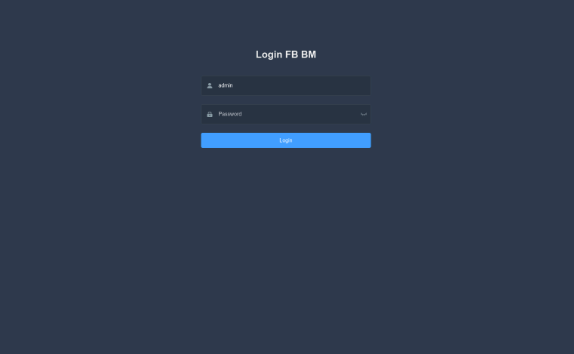
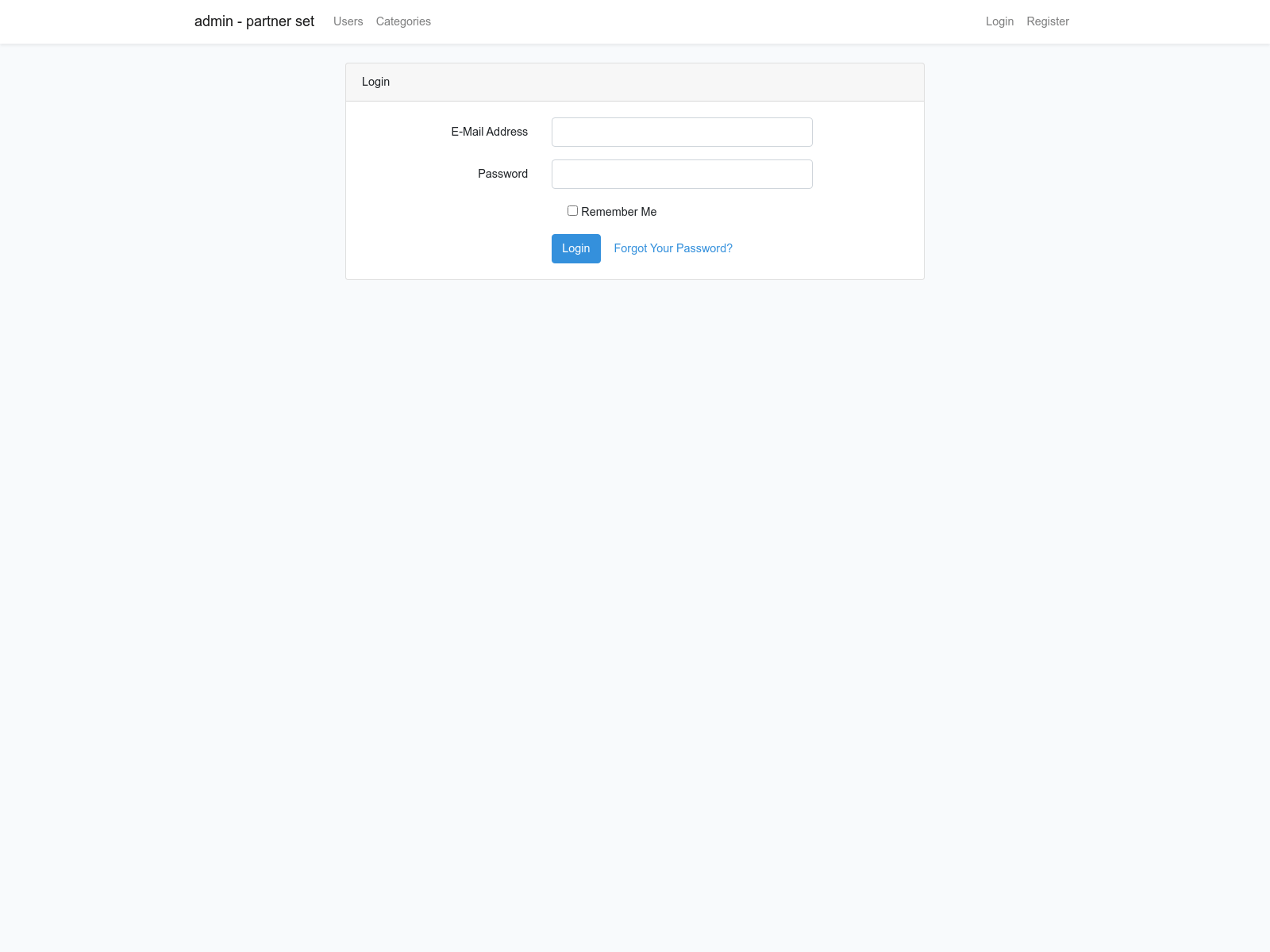
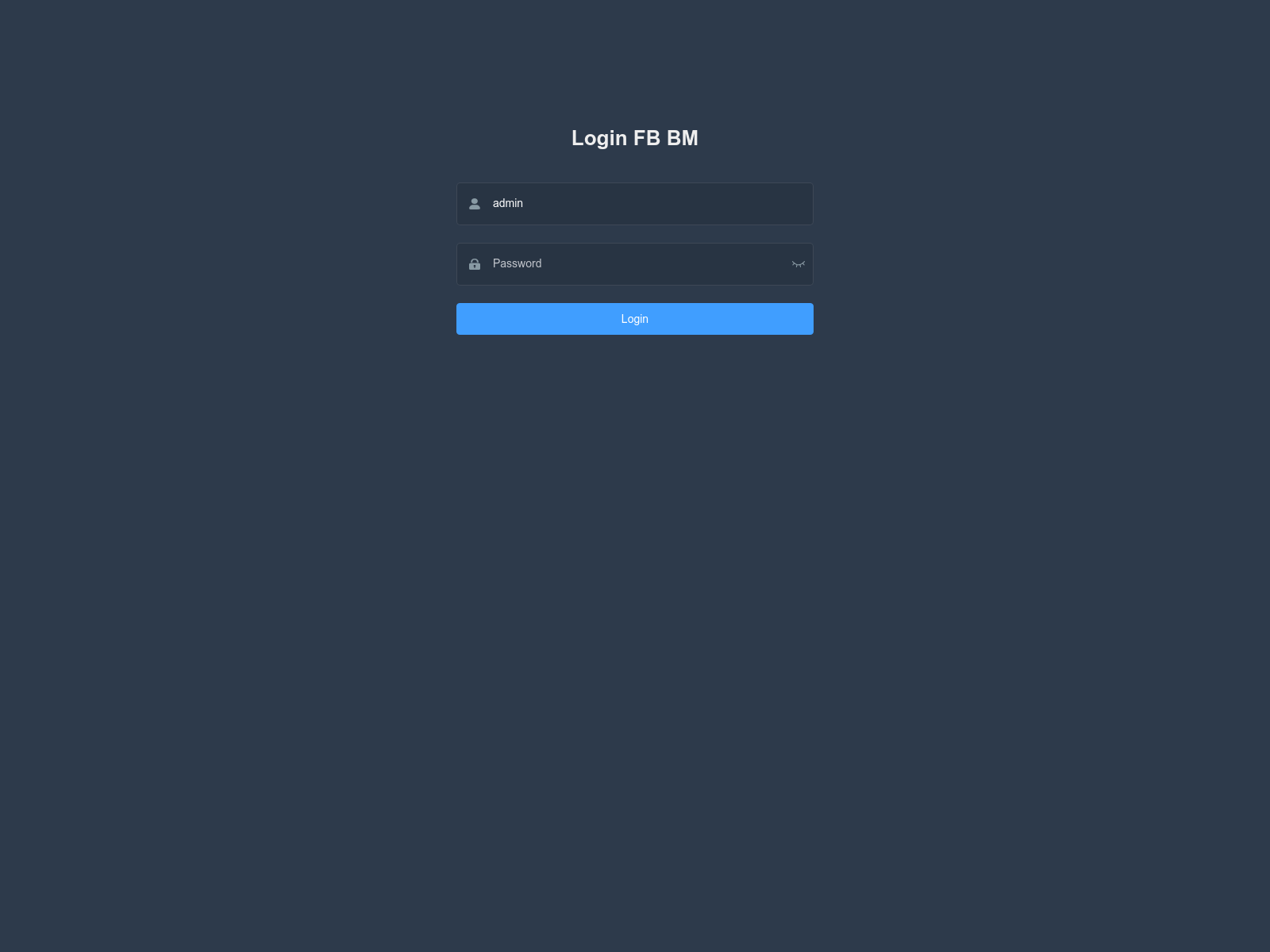
Urls can data also shows some of the identified infrastructure hosting credential phishing pages as far back as February 2024. Figure 2 shows a credential phishing page for an unidentified service hosted on admin-set.tkpartner[.]pro (left) and a phishing page likely meant to spoof Facebook’s Business Manager service hosted on tkadmin7.tkv2[.]pro (right). There is not enough evidence to determine how potential victims were directed to these pages or how the actor responsible leveraged compromised credentials.
Figure 2. Credential phishing pages hosted on infrastructure likely related to that used in the Cyberhaven incident.
Conclusion
It is likely that the Cyberhaven incident was part of a months-long campaign seeking access to sensitive data related to popular web services such as Facebook and ChatGPT. This assessment is made with high confidence based on identified infrastructure, the usage time frame of the infrastructure, and code within the actor’s configuration files. Observed tactics, techniques, and procedures (TTPs) indicate this actor is more likely criminal than state-sponsored.
Domain hijacking attacks like subdomain takeover and SPF hijacking take advantage of vulnerable or stale configurations in a target domain. The vulnerable domains are then leveraged in spam or phishing campaigns or to spread malware. They can be particularly successful as they can take advantage of the target domain’s established reputation to subvert spam filters and other reputation-based detections.
Subdomain Takeover
In the case of subdomain takeover, attackers look for subdomains that are configured to point to a service that does not appropriately handle subdomain ownership verifications.
Attackers can identify subdomains pointing to other services by using a range of openly available tools such as Sublist3r, Assetfinder, and ReconNG. Attackers would then check for vulnerable services such as those that allow custom domain names like GitHub pages, AWS S3 or by looking for domains that continue to point to services that no longer exist.
Exploiting these vulnerable domains allows the attacker to host malicious content such as phishing pages or malware from the domain. This type of attack may allow for “subdomailing”, which refers to the type of email spoofing attack that leverages subdomains of a legitimate domain to send fraudulent emails.
Example DNS log of a potentially vulnerable subdomain:
mail.vulnerable-domain[.]com.  IN  CNAME
pages.githubusercontent[.]com.
This shows that mail.vulnerable-domain[.]com points to GitHub pages. If for example the associated GitHub pages repository were deleted and the DNS record is unchanged, an attacker could re-create the deleted repository under the same name. In effect, allowing the attacker to control the content of the target domain.
SPF Hijacking
In contrast to subdomain takeover, SPF Hijacking occurs when an attacker gains access to a target’s DNS records either via the registrar or by exploiting vulnerabilities in the DNS infrastructure. Once the attacker has access they can modify the SPF record of a domain. For example, the attacker could add in one of their own domains into the target domain’s SPF record. In effect, this would allow the attacker to send emails that would appear to be originating from the target’s domain.
Example DNS log of a vulnerable SPF record: vulnerable-domain[.]com. IN TXT "v=spf1 mx -all"
Example attacker tool to modify a DNS record of a target domain: pdnsutil modify record vulnerable-domain[.]com TXT 'v=spf1 mx attacker-domain[.]com -all'
Example DNS log of the compromised SPF record for domain insertion: vulnerable-domain[.]com. IN TXT "v=spf1 mx attacker-domain[.]com -all"
In the examples above, pdnsutil, a powerful DNS management tool, is used to modify the “TXT” record of a vulnerable domain to include the attacker’s domain in a new SPF record "v=spf1 mx attacker-domain[.]com -all"
Hunting
Pivoting off a report by Guardio in February 2024, which detailed a large campaign of subdomailing activity involving two attacker domains inserted into vulnerable DNS records.
harrisburgjetcenter[.]com greaterversatile[.]com
Equipped with knowledge about domain takeover attacks, we can hunt for characteristics of subdomain takeover and SPF hijacking.
To start, we may take similar approaches to an attacker in which passive reconnaissance tools or historical DNS and web scanner data aggregators are leveraged to passively identify potentially vulnerable domain configurations.
Reviewing recent DNS records for actor domain greaterversatile[.]com in RDATA:
Breaking down the RDATA: "v=spf1 include:harrisburgjetcenter[.]com include:greaterversatile[.]com -all"
v=spf1: indicates it's an SPF record version 1, the most commonly used version.
include:harrisburgjetcenter[.]com: instructs the receiving mail server to consult the SPF record hosted on the domain harrisburgjetcenter[.]com. The receiving server will then use that record to determine if an email claiming to originate from the original domain is legitimate.
include:greaterversatile[.]com: the receiving server will also consult the SPF record hosted on greaterversatile[.]com
-all: specifies a "hard fail" for any email that doesn't pass the SPF check based on the included records. In other words, any email not authorized by the records from harrisburgjetcenter[.]com or greaterversatile[.]com will be rejected.
Reviewing recent DNS records for actor domain greaterversatile[.]com in RRNAME:
The above DNS records shows that the actor domain greaterversatile[.]com had SPF records in February 2024 that point to several domains and hundreds of IP addresses and in October 2024 was updated to point to two dynamic DNS domains.
Due to the grouping of SPF record placing, the following domains are likely also actor owned during their respective times of association.
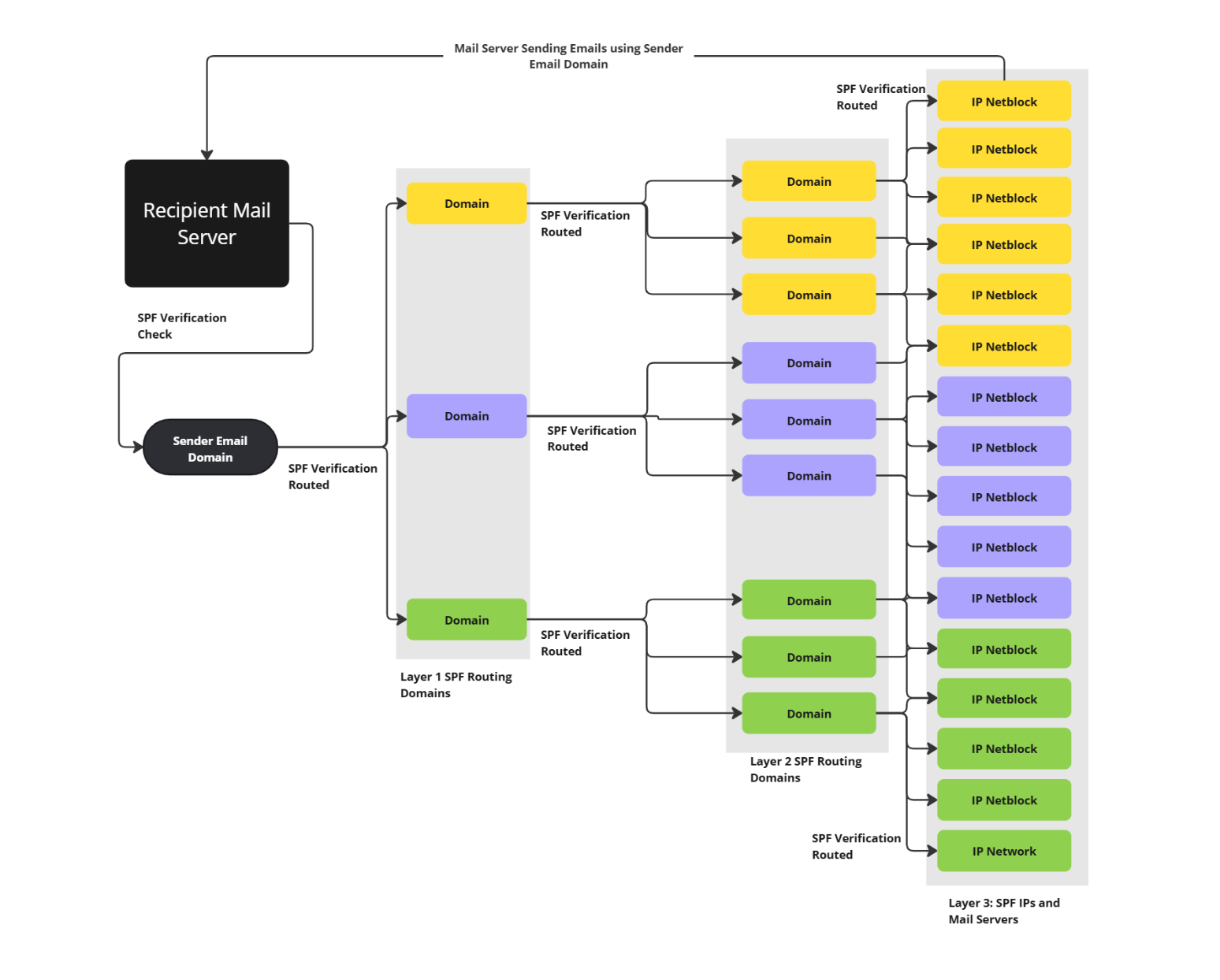
In summary of the above records if the domain tracks.vooyo[.]id sends email, the receiving mail server would attempt to validate the SPF records from the actor domains harrisburgjetcenter[.]com and greaterversatile[.]com, which would then be routed again to instanttranslates.dynu[.]net and informationshout.dynu[.]net.
The following DNS records for instanttranslates.dynu[.]net. indicate additional SPF routing would take place.
Due to their use in the SPF records of other actor domains, these additional dynamic DNS domains also acting as SPF redirectors are likely actor operated domains as well:
Subsequently looking up the SPF redirects for universitygreatchoices.gleeze[.]com and others identifies records such as the following in which the designated IP ranges are authorized to send mail by the original domain.
The following diagram shows how the chained SPF records create multiple layers of redirects.
In summary, the chained SPF records create multiple layers of SPF redirects. This may serve to obfuscate the originating mail servers and distribute infrastructure to increase resiliency from disruptions affecting portions of the network. It may also serve to evade detection by hindering analysis by making it difficult for anti-spam and security researchers to identify patterns and write signatures to detect and block the network and the activity it is being used for.
The Senders
Sampling the IP addresses in the RDATA records show a trend of mail servers, reverse DNS, Apache HTTP servers, and Squid Cache servers.
The IPs associated domains to the SPF records were also observed hosting content such as the following samples:
This research has only touched the surface of what appears to be a very large and well coordinated spam and phishing network taking advantage of DNS-related misconfigurations or weaknesses. Indications from domain and infrastructure pivots suggest the network has been operating since at least 2019 to present. The operators of the network appear to demonstrate awareness and response to security reports of their infrastructure and appear to have made multiple attempts to improve its resiliency to identification and disruptions.
BlackBerry, SloppyLemming, and Guess Who...Cloudflare
On 18 November 2024, BlackBerry’s threat research team reported on a cyber espionage campaign targeting the Pakistan Navy. This campaign used malicious documents to collect credentials and distribute malware. While BlackBerry did not attribute this activity to a specific actor, subsequent analysis by DomainTools revealed significant overlaps in tactics, techniques, procedures (TTPs), and targeting scope with the cyber-espionage group known as SloppyLemming.
Review of BlackBerry Report
Recent activity from this campaign involved the deployment of a malicious PDF document in early September 2024. The document resembles an internal IT memo, instructing recipients on integrating Axigen Thunderbird for secure email communications. The document contained a link to a malicious website (paknavy.rf[.]gd) mimicking the legitimate Pakistan Navy domain.
Upon visiting the fraudulent site, users were prompted to download a ZIP file, “Axigen_Thunderbird.zip,” which included a malicious Thunderbird extension. Once installed, the extension requested credentials for “@paknavy.gov.pk” email addresses. Entered credentials were transmitted to an actor-controlled domain (updateschedulers[.]com), and the extension downloaded a malware payload hosted on the same domain. BlackBerry researchers identified the malware as a variant of Sync-Scheduler. Public reporting from March 2024 first identified this malware family and its use of the domain packageupdates[.]net for command and control (C2). BlackBerry also identified related activity in the May/June 2024 time frame using the C2 domain extension.webmailmigration[.]com.
Further analysis by DomainTools uncovered an additional likely associated domain: diplomaticservices[.]link. Whois data from this domain shows a registrant organization of “National Telecom Corporation” likely referencing the Pakistani government’s telecommunications provider. The only other domain using this registrant organization since 2010 is the webmailmigration[.]com domain from the BlackBerry report.
Overlap with SloppyLemming Actor
In September 2024, Cloudflare’s threat research team reported on an India-nexus cyber espionage actor it dubbed SloppyLemming (aka OUTRIDER TIGER). This actor primarily targets Pakistan, with a focus on government and defense. SloppyLemming frequently leverages its custom CloudPhish credential logging tool on Cloudflare Worker domains to compromise email credentials from targeted individuals. One of the mail clients CloudPhish specifically targeted was Axigen, which was the mail client referenced in the malicious activity covered in the BlackBerry report. SloppyLemming also employed PDF documents for credential collection and malware delivery.
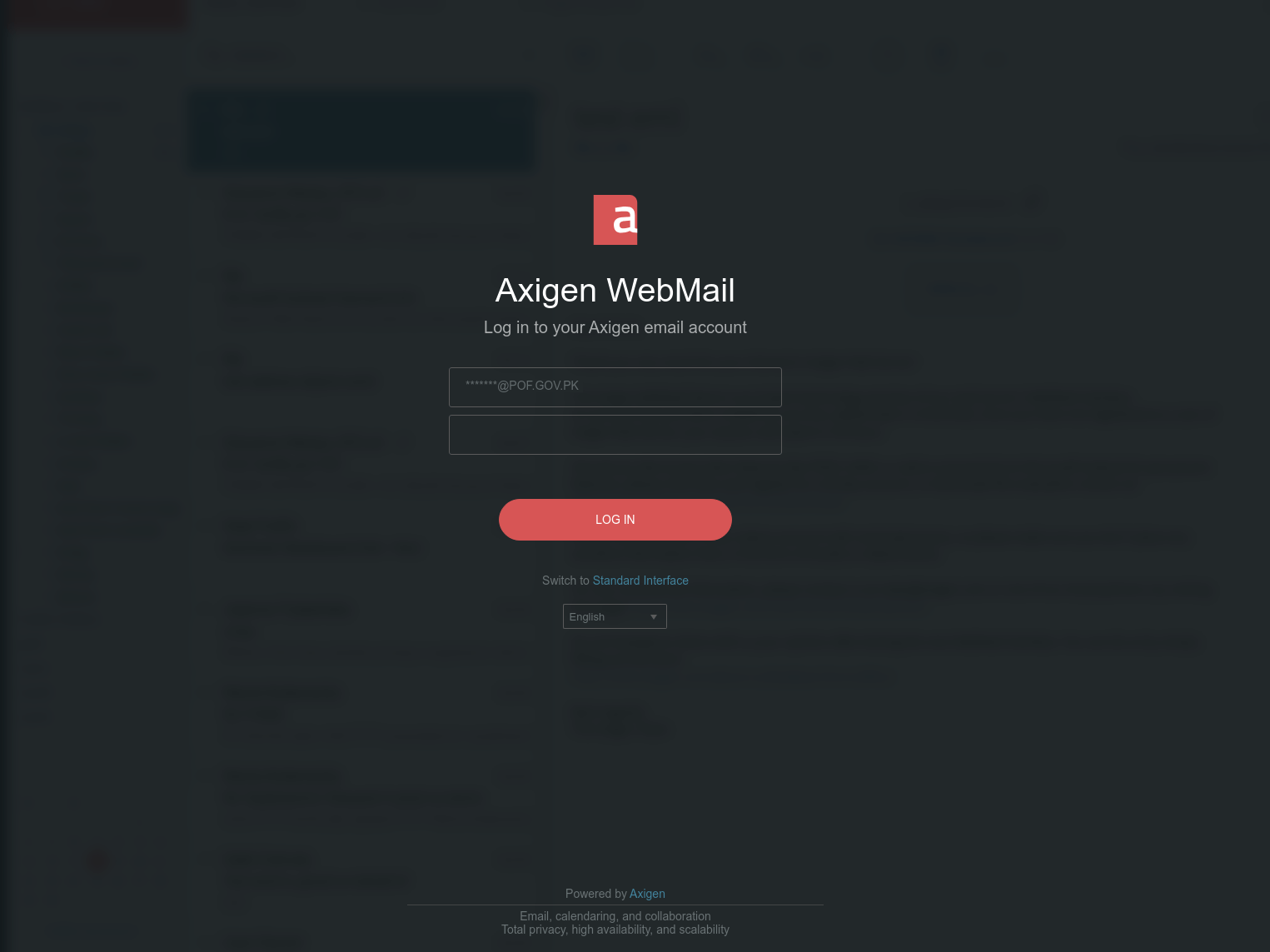
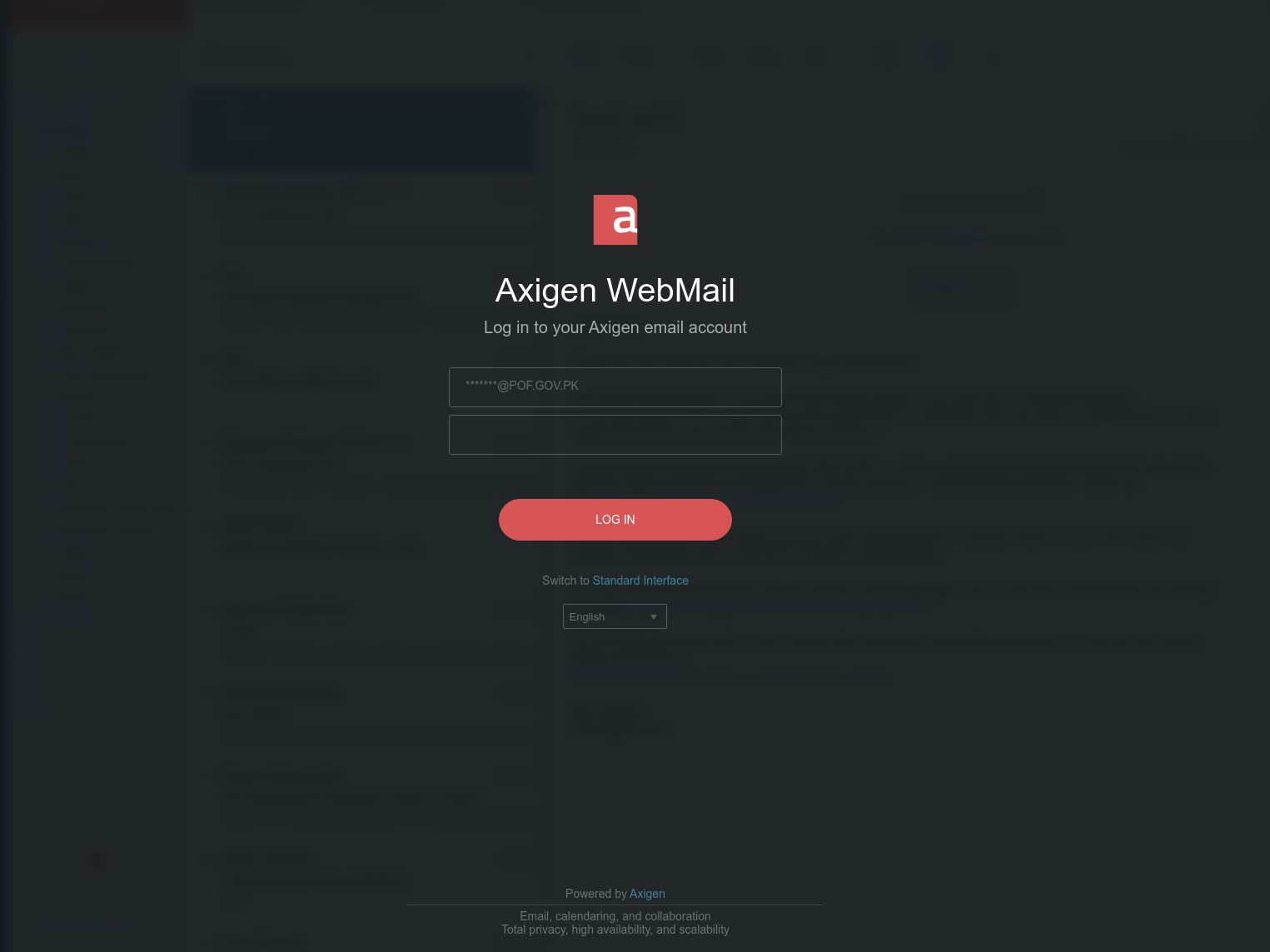
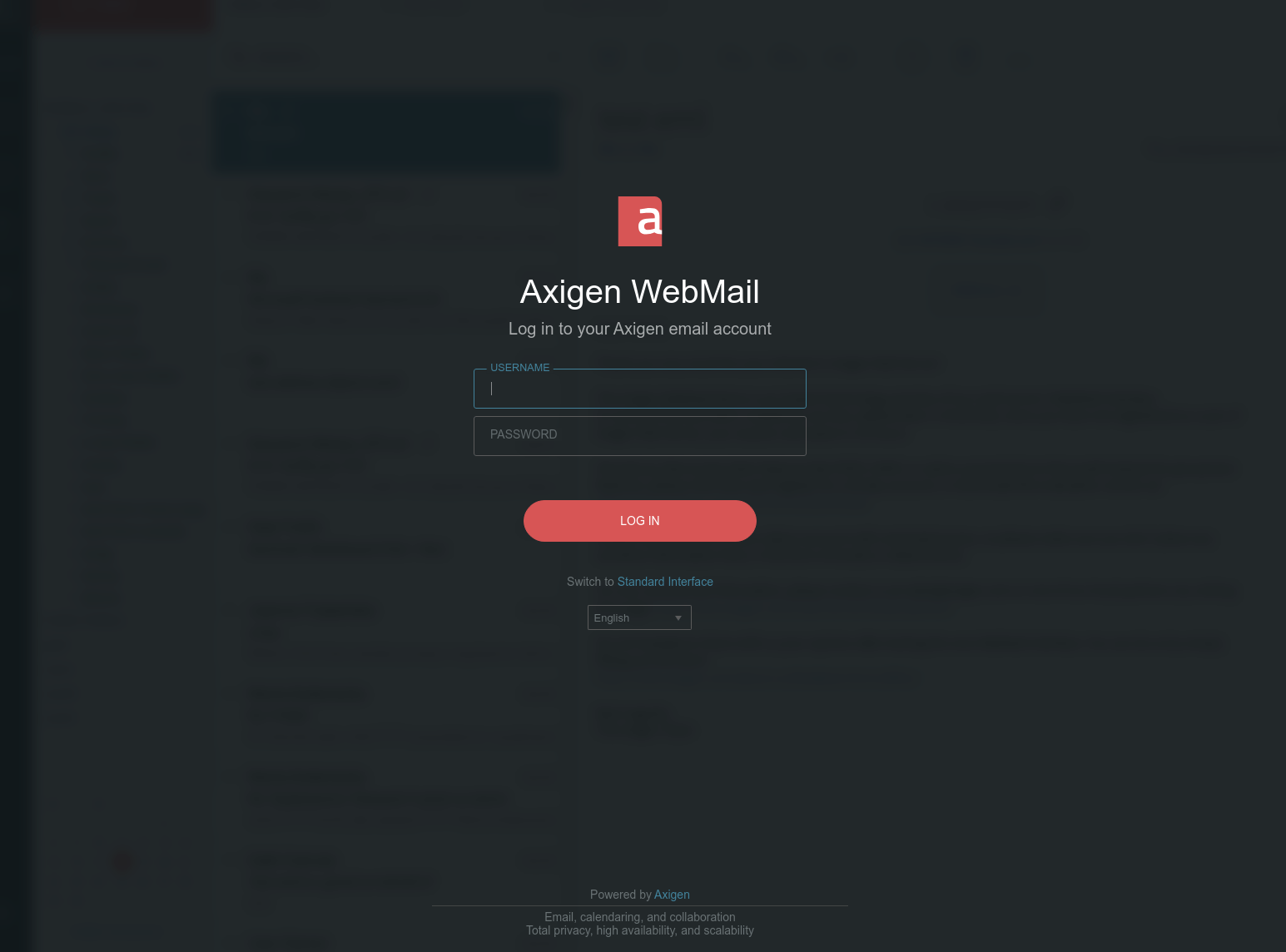
Data from the urlscan.io scanning service shows an Axigen webmail credential phishing page present on www.login.webmailmigration[.]com in April 2024. Similar Axigen phishing pages present on the following domains between February and July 2024:
mail-pakchinainvest-com.niancao010.workers[.]dev
webmail.cybar-net-pk.workers[.]dev
mail.pof-gov-pk.workers[.]dev
These domains use a similar domain naming convention to that detailed in the SloppyLemming report.
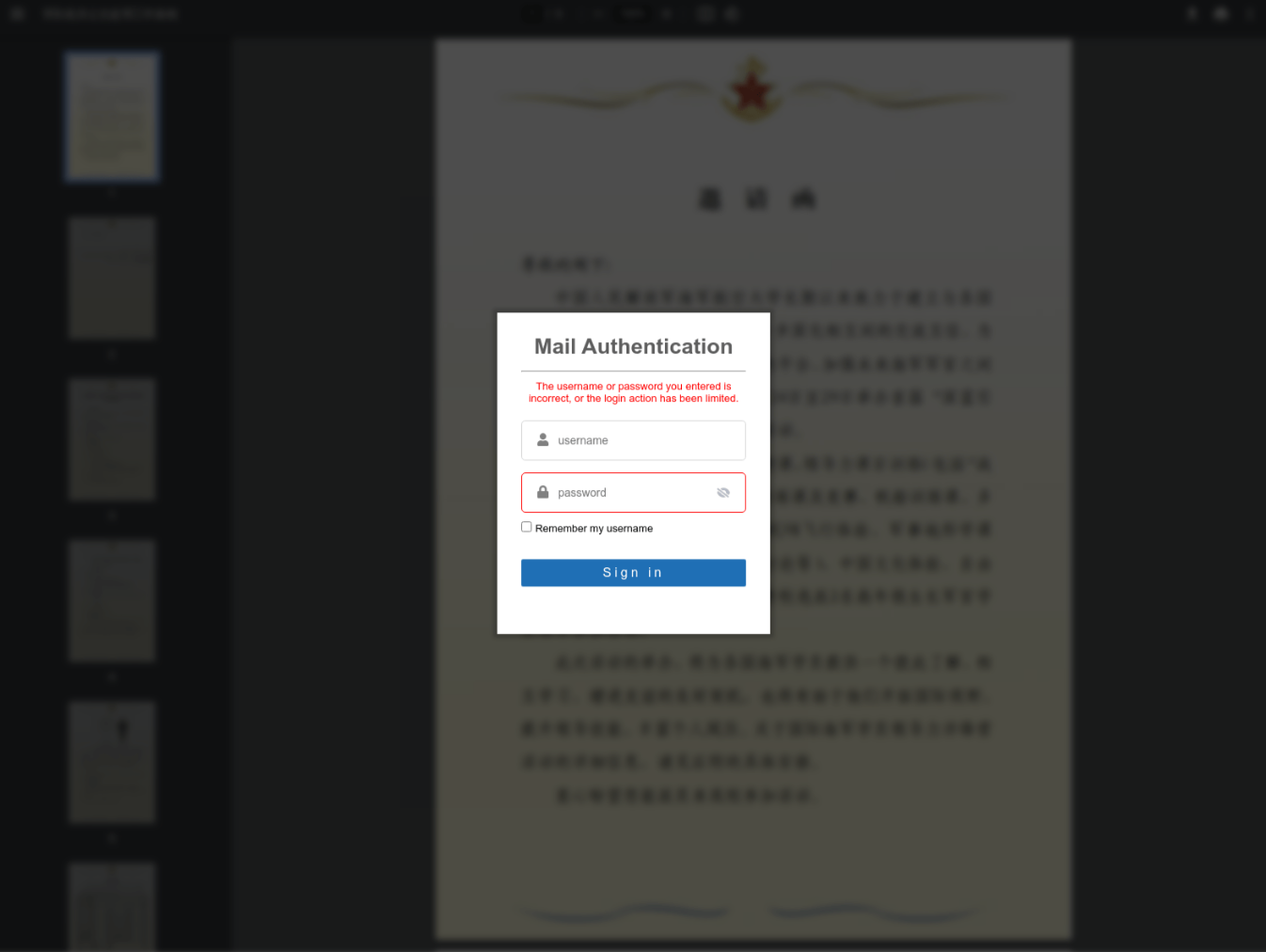
Figure 1. Screenshot of credential phishing pages present on www.login.webmailmigration[.]com in April 2024 (left) and mail.pof-gov-pk.workers[.]dev in August 2024 (right)
Additional similarities between the recent BlackBerry and Cloudflare’s reports include the actor’s use of malicious PDFs malware delivery and a Pakistan-centric target scope.
Conclusion
It is likely that SloppyLemming is the actor responsible for the malicious activity described in BlackBerry’s recent report. This assessment is made with low confidence based on similar credential phishing and malware delivery TTPs, as well a Pakistan-focused target scope. However, it is plausible that the BlackBerry report discusses a separate actor from SloppyLemming that is employing similar TTPs.
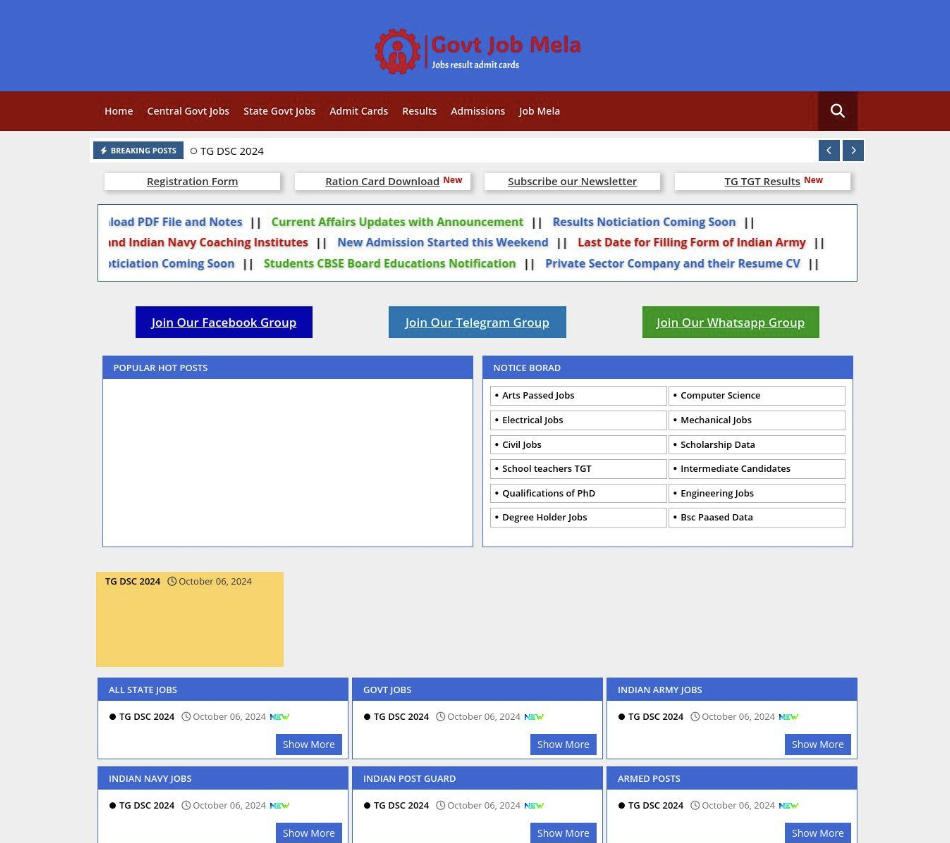
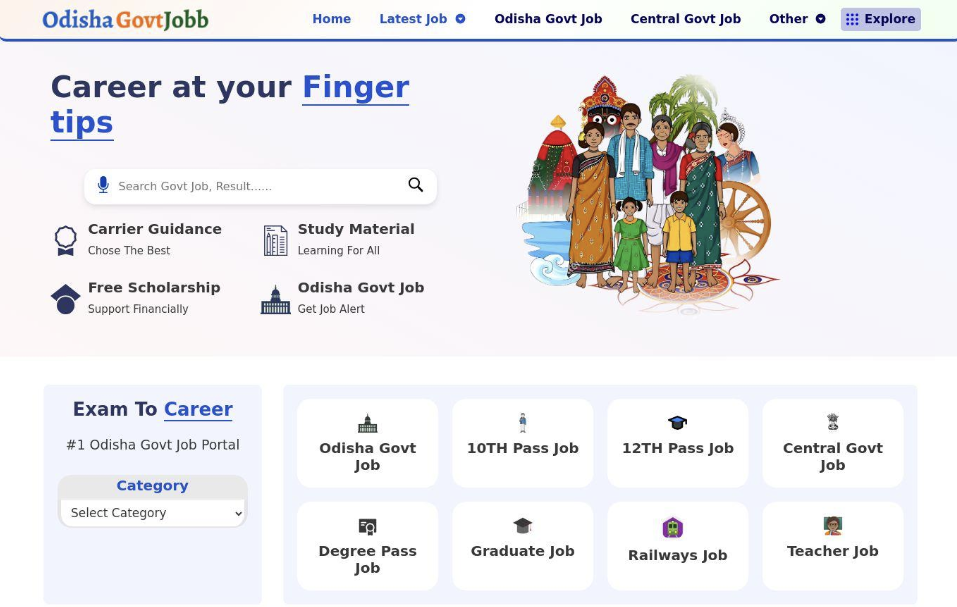
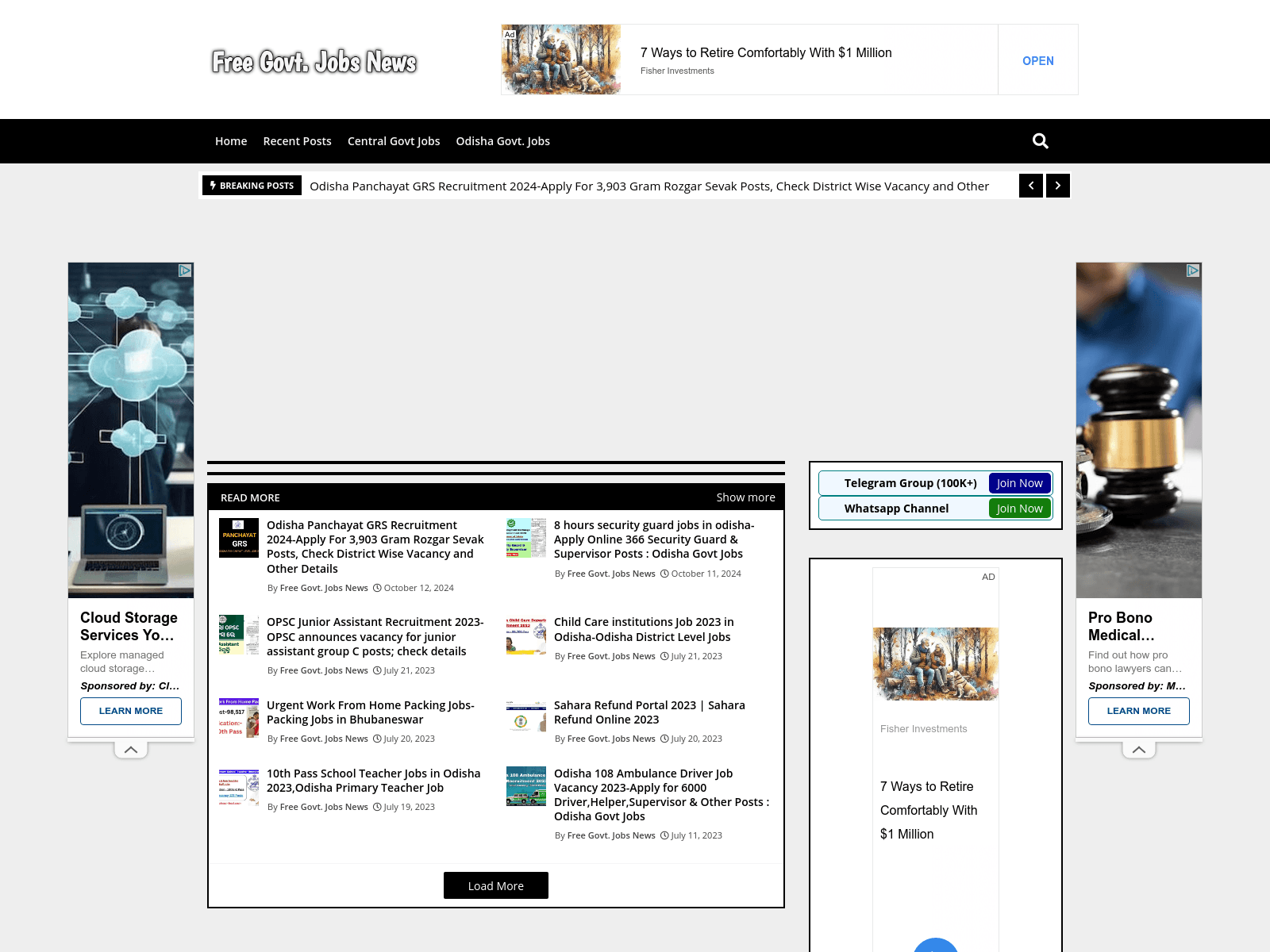
Fake government job boards attempt to trick job seekers into providing personal information that may be used for fraud, phishing, or other malicious purposes. The bad actors behind these fake job boards cause harm by either soliciting an application fee from victims or by instructing them to download malicious files or deceiving victims into giving personal information such as resumes, historic addresses and contact information.
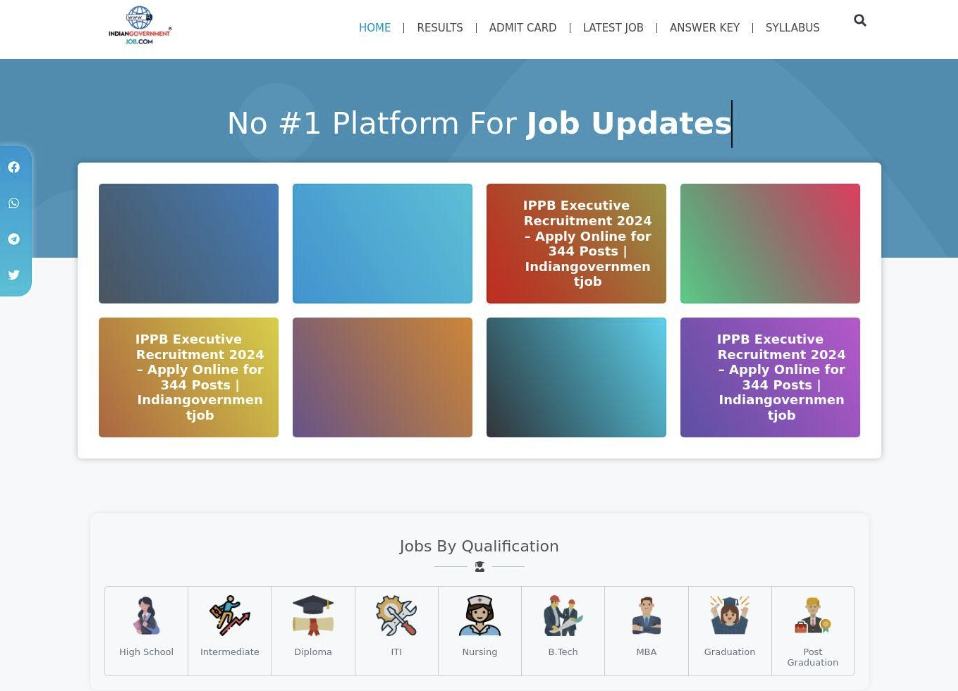
Multiple countries were identified as targeted by a high number of fake government job boards. For instance, many of the identified domains masquerading as US government job boards were reportedly associated with email campaigns. Those in Pakistan and India appear largely fraud related and employ WhatsApp and Telegram groups. Fake Taiwanese government job postings are suspected to be harvesting personal information for phishing and fraud.
Similarly, nation states such as North Korea also host fake job postings for phishing, and creating fake personas in attempts to be hired by and gain access to western tech companies.
Details
Fake US Government Job Websites
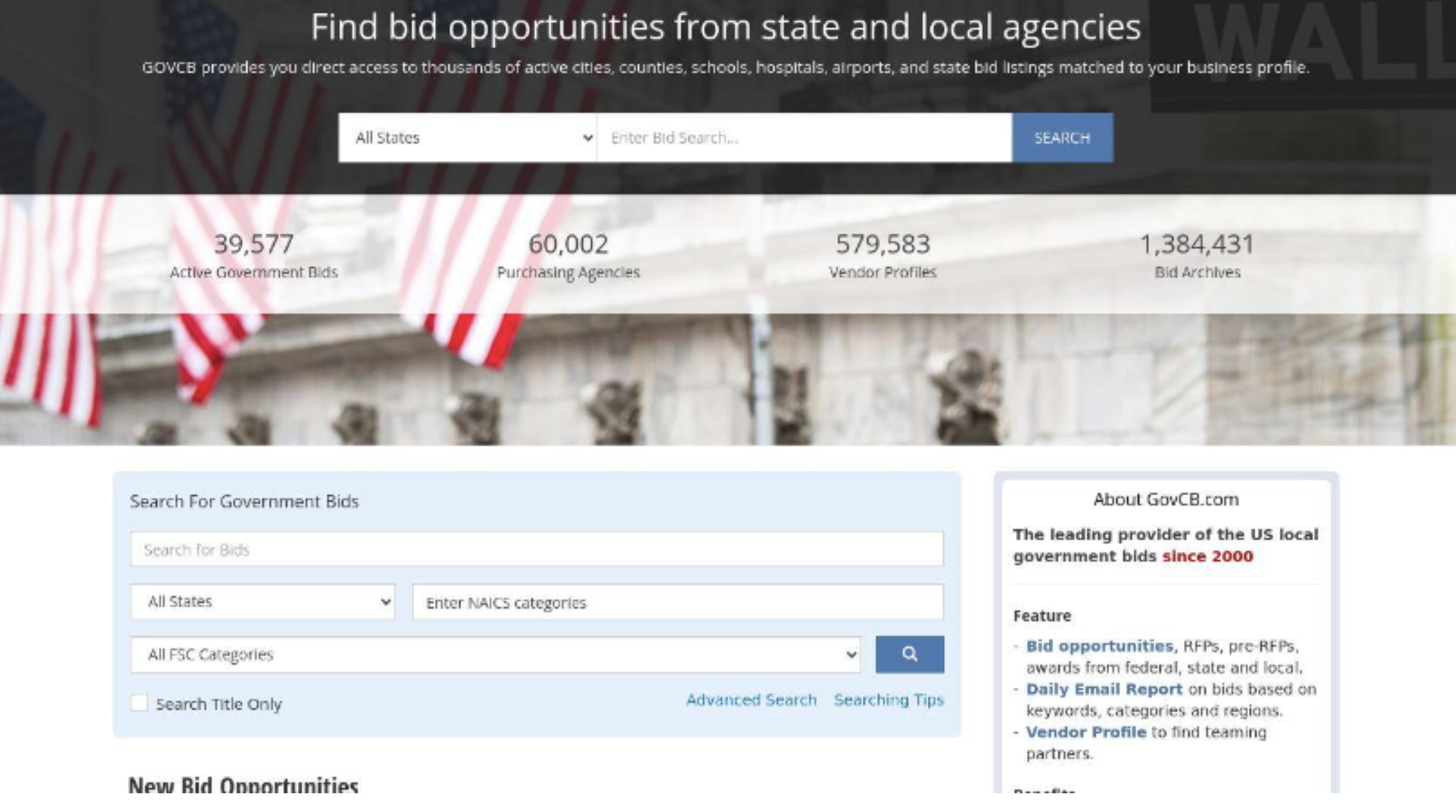
A cluster of domains that goes back to early as 2017 and associated mail servers have been used in email spam. The domain names masquerade as government job or contract bid sites. The domains are frequently configured to redirect to legitimate government job sites such as govcb[.]com and governmentcontracts[.]us likely for the purpose of appearing more legitimate upon inspection.
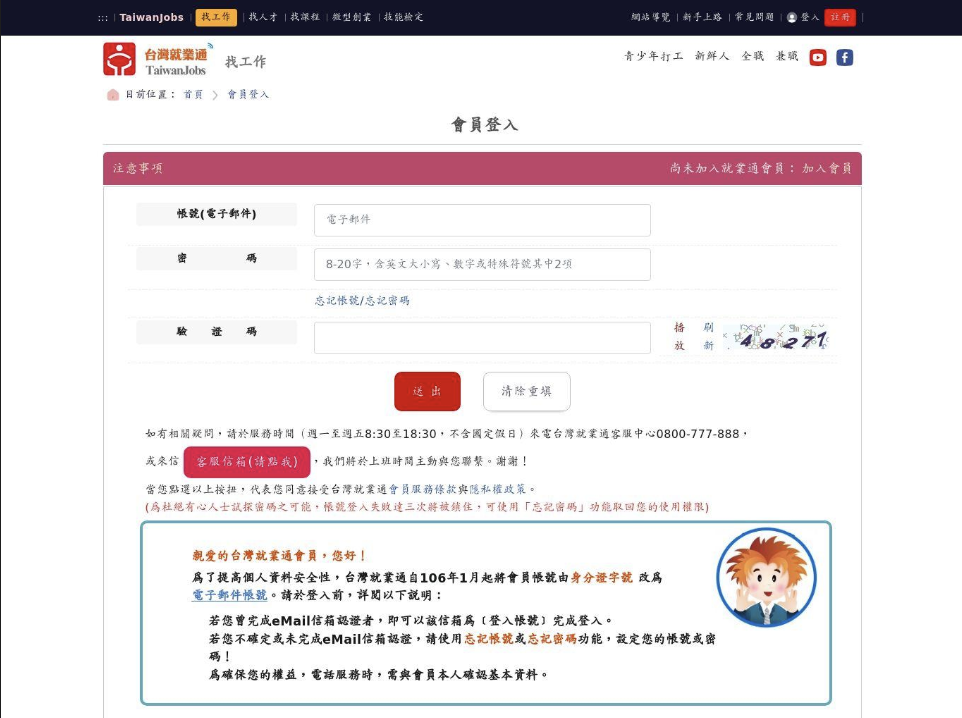
Spoofing as the legitimate taiwanjobs[.]gov[.]tw website for the purposes of phishing, information gathering, and credential harvesting. Taiwanjobs[.]gov[.]tw website reports the following message of ongoing phishing activity using fake look alike websites.
Mela Network is the Middle Eastern arm of a global network spanning 46 countries. Their website states: “Mela's mission is to help executives in the MENA (Middle East and North Africa) region grow professionally and personally by exposing them to best practices in leadership and connecting them with a global network of peers.” [https://melanetwork.org/]
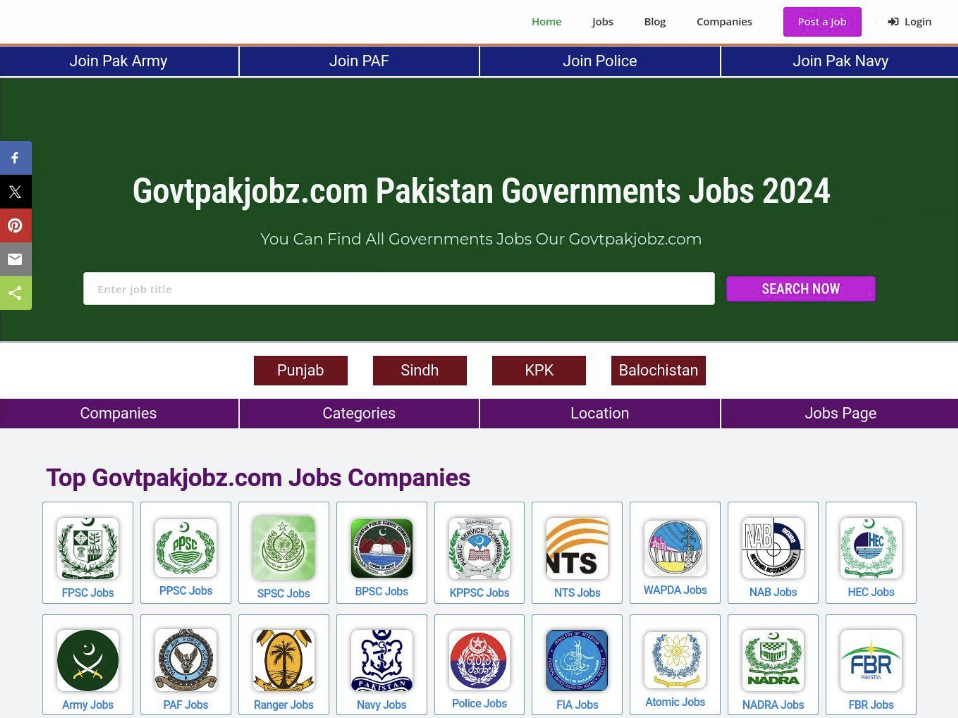
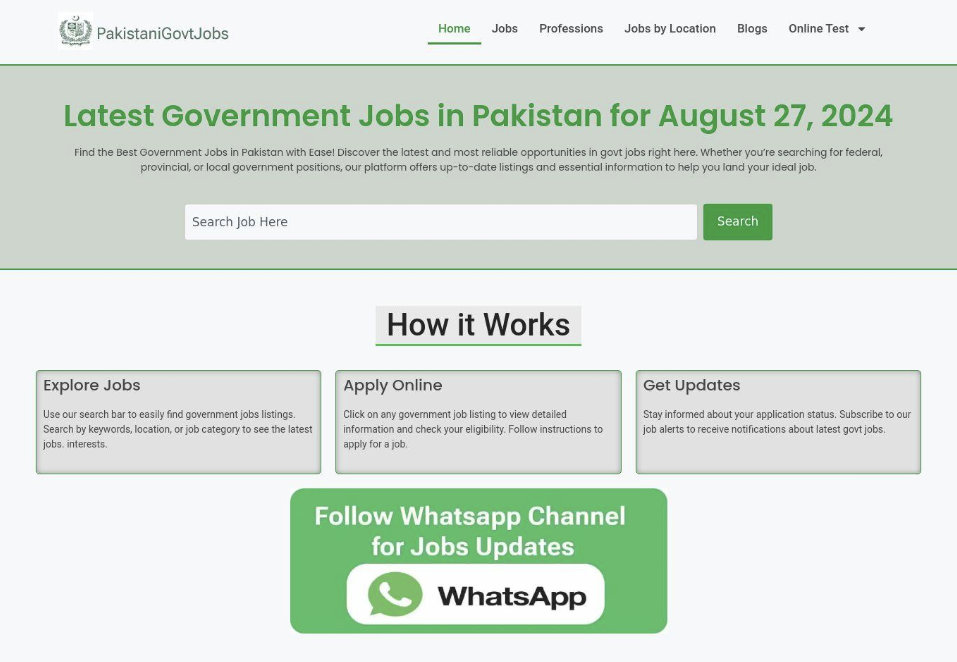
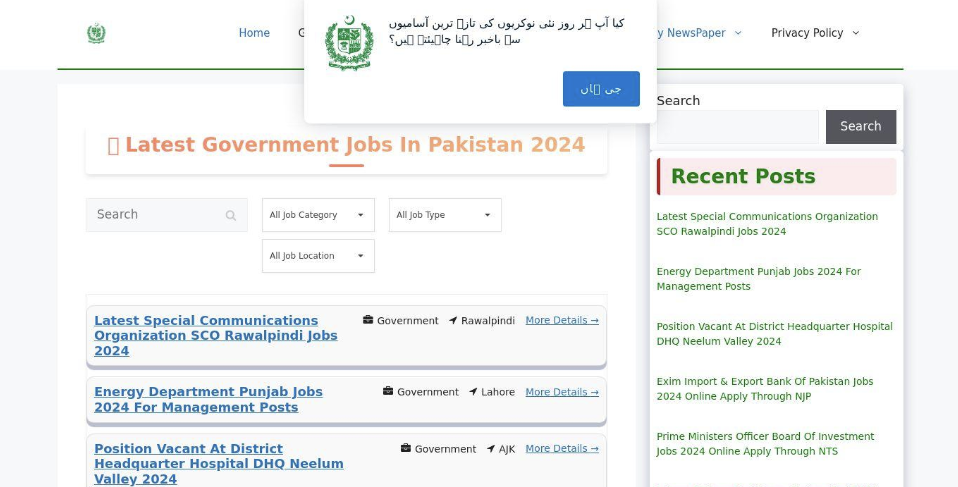
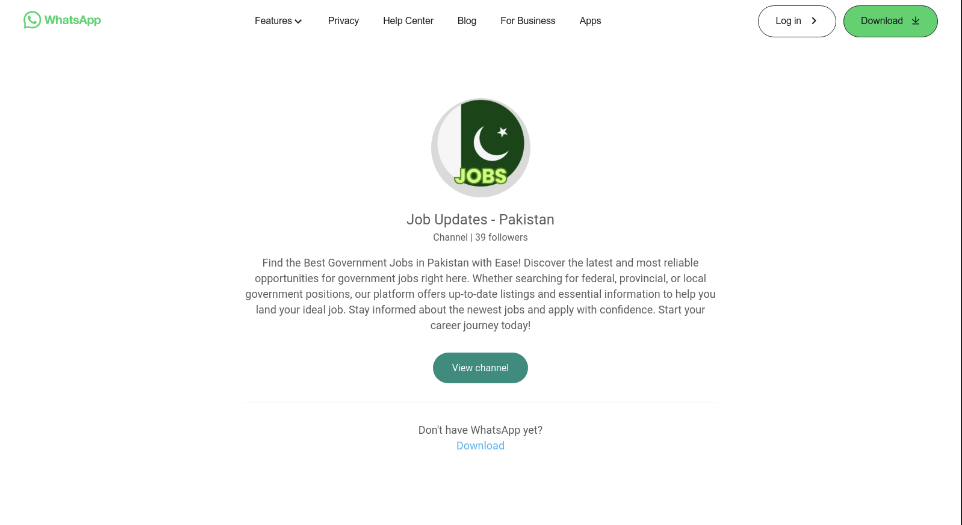
Fake Pakistan government job boards similar to those for Indian government job boards. WhatsApp channels and Telegram group links are displayed on pages. Many of these sites are suspected to be used for phishing and fraud.
Website Titles
Domains
Latest Government Jobs in Pakistan Pakistan Governments Jobs 2024 Pakistan Governments Jobs Government Jobs in Pakistan
Fake job boards are common around the world. They seek to take advantage of job seeker’s motivations in order to harvest personal information and may lead into additional fraud schemes, phishing, identity theft, and malware delivery.
Job seekers should conduct research on job postings before applying, recognize domain name masquerades and be wary of unsolicited job offers. Additionally, it's crucial to recognize red flags such as unexpected fees, high-pressure tactics, requests for sensitive personal information, and unknown personas offering special favors.
Ever think about the duality of fishing and hunting? Folks may argue fishing is a more passive endeavor. One sets a lure and waits. Hunting on the other hand, folks may argue, is a more active endeavor in which a hunter might generally be expected to seek out their intended target.
Let’s put this in terms of cyber threats. Most humans by now have undoubtedly heard of cyber attacks and perhaps even had some experiences with phishing in its various forms be it over email, text, voice call or a discord channel. But, what about the threat hunters? Threat hunting proactively seeks out undetected threats, usually within an organization’s network. Investigating indicators in a threat report can identify suspicious domains, detect patterns, and correlate findings with other sources.
With that said, thousands upon thousands of ill-intent domains are registered every day and some few fine folks set out the hounds and have a proper hunt. As one does, the trails are scoured and more indicators are found. But without further ado, this is one such quarry.
Opening Meet
This hunt got its start from a CloudFlare report on SloppyLemming. Also known as Outrider Tiger, SloppyLemming has reportedly been targeting Pakistani entities among others in Southeast Asia since late 2022. A range of domains have been utilized to lure victims into credential harvesting sites and deliver malware.
Frequent Domain Registration Patterns
Use of CloudFlare services
90 day SSL Certificates
Trends in domain naming convention
Frequently assessed with risk scores of 100 by DomainTools
There’s the scent and the hunt begins. Sifting through domain registrations, DNS records, web scan data and the like, the lines form.
Hunting For Associated Indicators:
SloppyLemming domain `aljazeerak[.]online`
Website Title `Pakistan International Airlines - PIA | Great People to Fly With` -> Unreported domain `fly-pakistan[.]com`
Historic Screenshot of domain aljazeerak[.]online masquerading as a Pakistani Airline
Site content of domain `pythonscanner.gov-pkgov.workers[.]dev`
Hunting for Domain Masquerades in Whois and Web Scans
Hunting for Pakistani domain masquerades using cloudflare. The nature of these broader hunts are apt to uncover unintended prey. In this case, the stumbling on a mix of Pakistani travel and government job boards, and Crypto exchange masquerades.
Hunting for undetected threats can take on many forms. Prompted by threat reports and intelligence, threat hunters may cast a wider net to seek out undetected indicators, detect patterns, and correlate findings with other sources of information. That said, wider nets can catch more than the intended quarry. In this case, finding an ecosystem of websites impersonating as Pakistani airlines, government job boards, as well as remnants of malicious domains and scanners on Pakistani government domains. While it may not all be SloppyLemming activity, it highlights an apparent wider spread targeting of Pakistan.
Since 1 August 2024, a likely India-nexus targeted intrusion actor has targeted entities in China and South Asia using credential phishing pages mimicking legitimate webmail login portals. Domain naming conventions as well as observed phishing pages reveal likely targeting of entities in the government and defense sectors. Observed tactics, techniques, and procedures and target scope are consistent with public reporting on Indian targeted intrusion actors.
Details
Identified domains share the following similarities:
Registration via 1api registrar service
Use of Royalhost nameservers
Resolving to the IP address 65.21.85[.]206
Domain naming convention using webmail login or file download themes often combined with references to specific, likely targeted entities
The 65.21.85[.]206 IP address is a shared host resolving numerous domains likely unrelated to the India-nexus targeted intrusion activity. However, historical data from this host indicates the India-nexus actor has used 65.21.85[.]206 since at least April 2024 to host phishing domains.
Figure 1. Example Credential Phishing Page from nepal-mofa[.]com
Analysis of this activity also shows one of the actor-registered domains (never-giveup.mail-downloadfiles[.]com) redirecting to a credential phishing page hosted on the cloud service Netlify (large-files-d0wnl0ad-session-expired.netlify[.]app). These domains are likely being used to target Chinese entities.
Figure 2. Chinese-language Credential Phishing Page Hosted on Netlify
This activity is consistent with targeted intrusion activity identified in previous public reporting. Naming conventions are generally consistent with activity from the group known as Sidewinder with domains spoofing webmail login portals and the targeting of entities in China and South Asia. The India-nexus targeted intrusion group known as Patchwork also historically exhibited a similar target scope.
In a recent article from KrebsonSecurity, they detail that at least a dozen organizations with domain names at domain registrar Squarespace saw their websites hijacked last week. Squarespace bought all assets of Google Domains a year ago, but many customers still haven’t set up their new accounts. Experts say malicious hackers learned they could commandeer any migrated Squarespace accounts that hadn’t yet been registered, merely by supplying an email address tied to an existing domain.
In this 15th edition, M-Trends provides an inside look at the evolving cyber threat landscape, with data drawn directly from frontline incident response investigations and threat intelligence findings of high-impact attacks and remediations around the globe.
The latest incident response metrics including dwell times, detection sources, initial infection vectors, and so much more
China-nexus attackers increasingly targeting edge devices and platforms that lack EDR
Trending adversary operations and motivations behind zero day attacks
The evolution of phishing techniques amidst modern security controls
How attackers are leveraging AiTM to compromise multi-factor authentication safeguards
The reasons and solutions behind growing cloud and hybrid cloud environment intrusions
How AI is effectively used in red and purple team operations to help boost cyber defenses
Another year has passed and that means another Verizon DBIR. For those that don’t want to read the full DBIR, here was our perspective from the Internet intelligence side of cybersecurity:
Median time for users to fall for phishing emails is 49 seconds
Pretexting is a more likely social action than Phishing
Ransomware was a top threat across 92% of industries (less representative than last year - median ratio of initially requested ransom and company revenue was only 1.34%)
The human element was a component of 68% of breaches
‘The Manipulaters’ Improve Phishing, Still Fail at Opsec
The Resurgence of the “Manipulaters” Team - Breaking HeartSenders
In January 2024, The Manipulaters pleaded with Brian Krebs to unpublish previous stories about their work, claiming the group had turned over a new leaf and gone legitimate. But new research suggests that while they have improved the quality of their products and services, these nitwits still fail spectacularly at hiding their illegal activities.