Domain hijacking attacks like subdomain takeover and SPF hijacking take advantage of vulnerable or stale configurations in a target domain. The vulnerable domains are then leveraged in spam or phishing campaigns or to spread malware. They can be particularly successful as they can take advantage of the target domain’s established reputation to subvert spam filters and other reputation-based detections.
Subdomain Takeover
In the case of subdomain takeover, attackers look for subdomains that are configured to point to a service that does not appropriately handle subdomain ownership verifications.
Attackers can identify subdomains pointing to other services by using a range of openly available tools such as Sublist3r, Assetfinder, and ReconNG. Attackers would then check for vulnerable services such as those that allow custom domain names like GitHub pages, AWS S3 or by looking for domains that continue to point to services that no longer exist.
Exploiting these vulnerable domains allows the attacker to host malicious content such as phishing pages or malware from the domain. This type of attack may allow for “subdomailing”, which refers to the type of email spoofing attack that leverages subdomains of a legitimate domain to send fraudulent emails.
Example DNS log of a potentially vulnerable subdomain:
mail.vulnerable-domain[.]com.  IN  CNAME
pages.githubusercontent[.]com.
This shows that mail.vulnerable-domain[.]com points to GitHub pages. If for example the associated GitHub pages repository were deleted and the DNS record is unchanged, an attacker could re-create the deleted repository under the same name. In effect, allowing the attacker to control the content of the target domain.
SPF Hijacking
In contrast to subdomain takeover, SPF Hijacking occurs when an attacker gains access to a target’s DNS records either via the registrar or by exploiting vulnerabilities in the DNS infrastructure. Once the attacker has access they can modify the SPF record of a domain. For example, the attacker could add in one of their own domains into the target domain’s SPF record. In effect, this would allow the attacker to send emails that would appear to be originating from the target’s domain.
Example DNS log of a vulnerable SPF record: vulnerable-domain[.]com. IN TXT "v=spf1 mx -all"
Example attacker tool to modify a DNS record of a target domain: pdnsutil modify record vulnerable-domain[.]com TXT 'v=spf1 mx attacker-domain[.]com -all'
Example DNS log of the compromised SPF record for domain insertion: vulnerable-domain[.]com. IN TXT "v=spf1 mx attacker-domain[.]com -all"
In the examples above, pdnsutil, a powerful DNS management tool, is used to modify the “TXT” record of a vulnerable domain to include the attacker’s domain in a new SPF record "v=spf1 mx attacker-domain[.]com -all"
Hunting
Pivoting off a report by Guardio in February 2024, which detailed a large campaign of subdomailing activity involving two attacker domains inserted into vulnerable DNS records.
harrisburgjetcenter[.]com greaterversatile[.]com
Equipped with knowledge about domain takeover attacks, we can hunt for characteristics of subdomain takeover and SPF hijacking.
To start, we may take similar approaches to an attacker in which passive reconnaissance tools or historical DNS and web scanner data aggregators are leveraged to passively identify potentially vulnerable domain configurations.
Reviewing recent DNS records for actor domain greaterversatile[.]com in RDATA:
Breaking down the RDATA: "v=spf1 include:harrisburgjetcenter[.]com include:greaterversatile[.]com -all"
v=spf1: indicates it's an SPF record version 1, the most commonly used version.
include:harrisburgjetcenter[.]com: instructs the receiving mail server to consult the SPF record hosted on the domain harrisburgjetcenter[.]com. The receiving server will then use that record to determine if an email claiming to originate from the original domain is legitimate.
include:greaterversatile[.]com: the receiving server will also consult the SPF record hosted on greaterversatile[.]com
-all: specifies a "hard fail" for any email that doesn't pass the SPF check based on the included records. In other words, any email not authorized by the records from harrisburgjetcenter[.]com or greaterversatile[.]com will be rejected.
Reviewing recent DNS records for actor domain greaterversatile[.]com in RRNAME:
The above DNS records shows that the actor domain greaterversatile[.]com had SPF records in February 2024 that point to several domains and hundreds of IP addresses and in October 2024 was updated to point to two dynamic DNS domains.
Due to the grouping of SPF record placing, the following domains are likely also actor owned during their respective times of association.
In summary of the above records if the domain tracks.vooyo[.]id sends email, the receiving mail server would attempt to validate the SPF records from the actor domains harrisburgjetcenter[.]com and greaterversatile[.]com, which would then be routed again to instanttranslates.dynu[.]net and informationshout.dynu[.]net.
The following DNS records for instanttranslates.dynu[.]net. indicate additional SPF routing would take place.
Due to their use in the SPF records of other actor domains, these additional dynamic DNS domains also acting as SPF redirectors are likely actor operated domains as well:
Subsequently looking up the SPF redirects for universitygreatchoices.gleeze[.]com and others identifies records such as the following in which the designated IP ranges are authorized to send mail by the original domain.
The following diagram shows how the chained SPF records create multiple layers of redirects.
In summary, the chained SPF records create multiple layers of SPF redirects. This may serve to obfuscate the originating mail servers and distribute infrastructure to increase resiliency from disruptions affecting portions of the network. It may also serve to evade detection by hindering analysis by making it difficult for anti-spam and security researchers to identify patterns and write signatures to detect and block the network and the activity it is being used for.
The Senders
Sampling the IP addresses in the RDATA records show a trend of mail servers, reverse DNS, Apache HTTP servers, and Squid Cache servers.
The IPs associated domains to the SPF records were also observed hosting content such as the following samples:
This research has only touched the surface of what appears to be a very large and well coordinated spam and phishing network taking advantage of DNS-related misconfigurations or weaknesses. Indications from domain and infrastructure pivots suggest the network has been operating since at least 2019 to present. The operators of the network appear to demonstrate awareness and response to security reports of their infrastructure and appear to have made multiple attempts to improve its resiliency to identification and disruptions.
Spetsvuzavtomatika Leak Exposes an SVR Cyber Development Ecosystem
A darknet data leak from the Russian research institute Spetsvuzavtomatika (SVA) has exposed an extensive cyber development ecosystem serving Russia’s Foreign Intelligence Service (SVR). The leaked Git repositories, project specs, and technical reports reveal a sophisticated, modular research and development model focused on automating key phases of espionage—from cloud-agent command-and-control (Initiative-24) and automated target reconnaissance (Felix-23, HAD) to internal domain exploitation (Putnik) and anonymous infrastructure procurement (Chain-24).
Learn More
Research
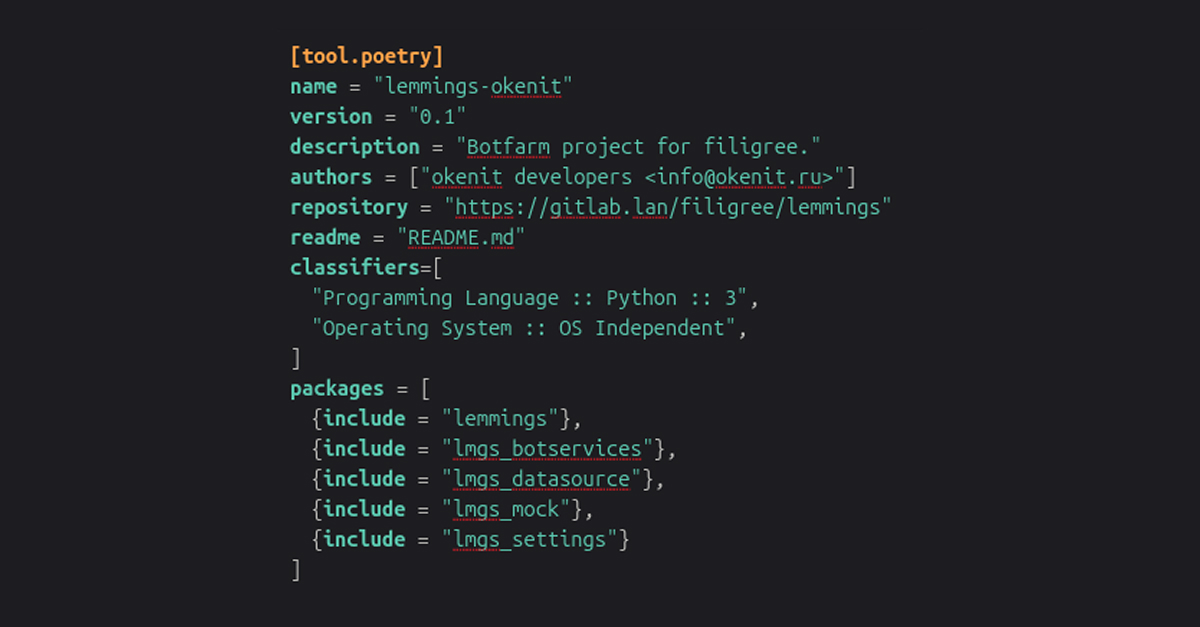
Lemmings: Russian Industrialized Persona Provisioning and Management for Active Measures Campaigns
Leaked internal data from Russian contractor Okenit reveals "Lemmings" (Лемминги)—a Python-based framework designed to industrialize the creation, verification, and management of synthetic online personas for Russian active measures. Built to automate phone verification, email infrastructure, CAPTCHA solving, and anti-detection measures, Lemmings functions as the identity-provisioning layer within a larger ecosystem alongside proxy and tasking tools (SOI and SOS). Live tests against platforms like VK and Reddit demonstrate a shift toward scalable, modular software frameworks capable of maintaining durable cover identities for intelligence, influence, and disinformation operations.
Learn More
Research
Threat Intelligence Report: University Leak Exposes Russia’s Military Cyber Training Pipeline
A leaked cache of institutional files reveals that Department No. 4 at Bauman Moscow State Technical University operates as a structured force-generation pipeline for Russian military cyber operations, training roughly 250 students across specializations. Supervised directly by senior GRU leadership, the program blends offensive intrusion, malware analysis, financial-systems targeting, and cryptographic defense with field placements that feed graduates straight into GRU- linked cyber formations like APT28 (Unit 26165) and Sandworm (Unit 74455).